Threat Hunting Tools: Categories, Criteria, and Limits

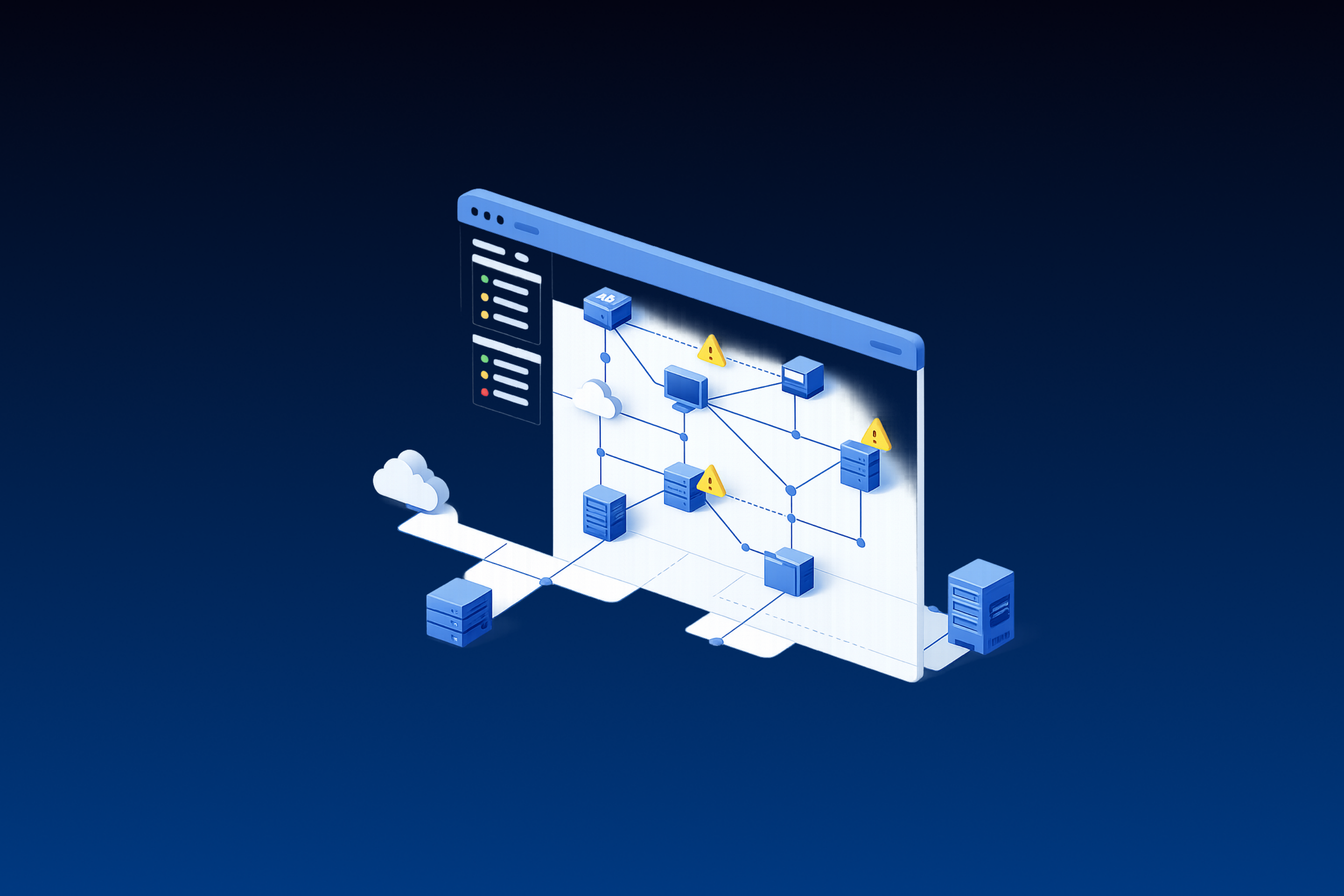

Threat hunting tools are the consoles, data platforms, and sensors a hunter uses to test a hypothesis against stored telemetry: EDR hunting consoles, SIEMs and security data lakes, network sensors, and open-source endpoint agents. Compare them first on how many days of telemetry they keep, which hosts and tables they cover, and whether identity data joins to endpoint data at all.
Feature matrices for threat hunting tools rank query languages and AI assistants. They rarely mention a 30-day lookback, a 100,000-row result cap, or the person who still has to decide what to look for. Those limits decide whether a hunt can prove anything.
TL;DR:
- Queryable retention is the first filter, ahead of query syntax, because native EDR hunting windows are short against the long dwell times of espionage intrusions.
- Each tool category answers a different question: EDR covers host behavior, SIEMs and data lakes cover cross-source joins and lookback, network tools cover devices without agents, and open-source tools cover investigator-driven collection.
- ATT&CK coverage percentages and automated hunting labels say little about whether a tool can test your hypotheses against your data.
- Tools can run hunts at scale, but the hypothesis still comes from people who know the environment.
The Four Categories of Threat Hunting Tools
Hunters rank EDR and XDR first among their hunting tools, followed by SIEM, with NDR and native cloud logs tied for third, according to the SANS 2026 Threat Hunting Survey. The table below summarizes what each category tests well and where it runs out.
1. EDR Advanced Hunting
EDR query consoles give the fastest path from a host-behavior hypothesis to evidence, and they carry the tightest limits. Microsoft Defender XDR advanced hunting covers up to 30 days of raw data in KQL. Each query run in the portal can return up to 100,000 records within a 10-minute timeout and a 64 MB result limit.
To query supported tables in advanced hunting beyond 30 days, onboard a Microsoft Sentinel workspace and configure analytics-tier retention. Streaming the data to an external service keeps it longer outside Defender, starting only from the day streaming begins. Data held only in the Sentinel data lake isn't available in advanced hunting at all.
SentinelOne Singularity Complete includes 14 days of stored EDR data, with paid retention up to 365 days, and its PowerQuery language can join subqueries into a single table.
2. SIEM and Security Data Lake Search
SIEMs and data lakes are where cross-source hunts and long lookbacks live, and the cost model shapes what you can afford to query. Google Security Operations, a cloud SIEM, includes 12 months of hot data retention in its Standard package. CrowdStrike said in October 2024 that Falcon Next-Gen SIEM keeps 7 days by default and up to 36 months with additional licensing, so check current terms.
Data lakes hold more for less, but query economics change. Splunk positions its federated analytics for Amazon Security Lake for occasional, ad hoc hunting searches, citing performance and cost. Amazon Athena bills $5 per terabyte scanned under its standard per-query pricing.
Normalization adds a cost of its own. Red Canary, now part of Zscaler, notes that linking a cloud identity to an EDR identity requires significant effort. Amazon Security Lake normalizes AWS sources to the OCSF schema, but custom sources must be converted to OCSF and Parquet before the lake will accept them.
3. Network-Based Hunting
Network telemetry is often the only practical way to test some hypotheses: beaconing, DNS tunneling, lateral movement between unmanaged hosts, and slow exfiltration. Zeek and Suricata are the common open-source sensors here. RITA scores beacon likelihood from Zeek logs, and its configurable severity thresholds let analysts start with the highest-scoring pairs.
Encrypted Client Hello, standardized as RFC 9849 in March 2026, encrypts the server name that plain TLS 1.3 leaves visible. Cloud flow logs have gaps of their own: AWS VPC Flow Logs don't record traffic to the Amazon-provided DNS server. Azure is retiring NSG flow logs on September 30, 2027, in favor of virtual network flow logs, so hunts built on them need a new source.
4. Open-Source Endpoint Tools: Velociraptor and osquery
Velociraptor and osquery suit investigator-driven collection that EDR consoles weren't built for, at the cost of running the infrastructure yourself. Canada's Cyber Centre issued an advisory in October 2026 urging Velociraptor users to upgrade to 0.77.3, so treat patch cadence as an evaluation criterion. Velociraptor's query language, VQL, works as glue that calls plugins on each endpoint. Pulling full triage collections of several gigabytes each from 100,000 hosts isn't viable, so Velociraptor runs targeted queries on the endpoint.
osquery exposes endpoint state as SQL tables. Its watchdog caps a worker's memory and CPU by default and denylists an offending query for 24 hours. Expect heavy hunts to get killed on constrained hosts.
How to Evaluate Threat Hunting Tools
Retention and data quality should lead the evaluation. In the SANS 2026 survey, data quality or quantity became the top barrier to effective hunting at 50%, overtaking skilled staff for the first time.
1. Queryable Retention Against Dwell Time
The queryable window is often shorter than how long the data is stored, so ask each vendor how far back a query reaches today and what longer retention costs. In Mandiant's 2025 investigations, reported in M-Trends 2026, global median dwell time was 14 days, and cyber espionage and North Korean IT worker incidents each had a median of 122 days. A 30-day lookback covers the global median but can drop the early activity of a long-running intrusion, even when recent evidence survives.
Splunk's worked cryptominer hunt calls for at least 30 days of data, but its sample dataset held a single day, which narrowed what the hunt could rule out.
2. Telemetry Depth per Hypothesis
Map your top hypotheses to the event types they need before scoring tools. Process creation events alone may not show the script content a PowerShell hypothesis needs; script block logging records it. Defender's Device tables stay empty unless Defender for Endpoint is deployed.
3. Cross-Source Correlation
Test a join you actually need during the trial, such as an Okta session to an endpoint process. Red Canary also notes that without a central hunt library or saved queries, analysts keep recreating the same content. Saved queries, versioning, and conversion to Sigma, the open detection rule format, reduce that rework.
4. Query Language Fluency
Pick platforms your team already queries fluently, whether that means KQL, SPL, or VQL. A more expressive language adds little if your hunters can't write it quickly under pressure. Check the defaults that silently truncate results, too: CrowdStrike's LogScale groupBy() returns 20,000 groups by default unless you raise the limit.
5. Cost of Exploratory Queries
Hunting is exploratory by design, so per-query and per-scan pricing like Athena's taxes the behavior you want. Model your own query volume against each vendor's published pricing before signing, since most published cost-savings figures in this market come from vendors.
What's Overrated
ATT&CK heatmaps lead the list. A binary coverage map treats 50 high-fidelity detections the same as 200 noisy rules, which inflates perceived coverage. Price tag comes second: an expensive console doesn't make the hunt better. Vendor claims of sub-second or unlimited search rarely come with an independent benchmark at multi-terabyte scale. Test against your own data volume.
What Threat Hunting Tools Can't Do
Developing a hypothesis for your environment still relies primarily on human expertise. Robert M. Lee and David Bianco argued in 2016 that hunting can't be fully automated, because one of the hunter's key contributions is forming the hypothesis that guides it. In 2026, Bianco said he is reconsidering that view: "I've spent a long time as one of the louder voices saying that hunting is specifically a human-driven process."
Even as more of the hunt moves to machines, business context comes from people and organizational memory, including which service accounts are sanctioned exceptions and what normal looks like for a finance team.
Tools Don't Create Hunter Time
Staffing remains the second-largest barrier, cited by 45% of respondents in the SANS 2026 survey. The largest group, 31%, runs three to five hunts a month. SANS notes that six or more asks a lot of people who almost certainly have other jobs too. Many teams fill the hunter role part-time with an incident responder or detection engineer. A faster query engine doesn't free that person from the alert queue.
Separate Predefined Automation From Agentic Investigation
Much of what gets sold as automated hunting is scheduled queries and predefined workflows, which work well for known indicators and don't form new hypotheses. Expel's definition of automated hunting covers that kind of automation and says it "cannot generate new hypotheses, follow unexpected evidence threads, or recognize novel attacker techniques." As a managed hunting provider, Expel has a stake in that framing.
Some newer agentic tools are built to iterate on evidence, so test whether a product only runs fixed logic or adjusts its investigation to what the data shows.
AI Hunting Assistants Still Need Validation
Microsoft's Threat Hunting Assistant reads table schemas, including custom Sentinel tables, then writes and runs KQL and interprets the results. It adjusts when the results miss the question and suggests follow-up questions and remediation steps for an analyst to apply.
A December 2025 study found that the quality of generated KQL varied widely by model and configuration, even though its best setup produced valid queries most of the time. A query can be valid and still miss the question the hunter asked. Detection Engineering Weekly's Zack Allen argues that without measurement against real-world malicious and benign activity, confidence in agentic security applications should stay limited.
Decision Criteria for Choosing Threat Hunting Tools
The right next purchase depends on what currently stops your team from testing its hypotheses.
- If you run Defender for Endpoint and hunt mostly on hosts, start with advanced hunting, and budget Sentinel retention for the tables you need beyond 30 days before buying anything else.
- If your hypotheses span identity, cloud, and endpoint, prioritize a SIEM or data lake with joins you've tested across those sources over a better EDR console.
- If cost forces you to drop telemetry, move cold data to a lake on a storage class your query engine can search, and accept slower ad hoc queries rather than shortening retention below your dwell-time assumptions.
- If you have unmanaged devices, OT, or flat internal segments, add Zeek and Suricata or a commercial NDR, and plan for encrypted traffic you can't inspect.
- If you need fleet-wide forensic collection and have engineers to run it, deploy Velociraptor alongside EDR with a patch process that keeps pace with its security releases.
- If your constraint is hunter hours, another tool won't fix it. Add execution capacity through managed hunting services, and protect hunting time in your threat hunting program.
Most teams hit more than one of these, so start with the constraint that blocks the most hypotheses on your backlog.
Why Hunt Execution Is Starting to Separate From Hypothesis Ownership
Splunk's PEAK framework has hunters form the hypothesis and then test it with data, and the TaHiTI methodology, first published in 2018, assigns hypothesis formation to the hunting team. Testing a hypothesis across months of endpoint, identity, and cloud data no longer has to mean one person iterating queries for a day. Execution scales that way, but context and judgment scale more slowly, and no outside provider can recreate logs that were never collected.
Separating execution from hypothesis ownership should shape how buyers staff around their tools. Keep hypothesis ownership in-house with one or two people, and source execution for the hunts that never leave the backlog. Claims about AI-generated hypotheses vary widely and have little independent evaluation, so treat execution and ideation as separate buying questions.
Daylight is a MASS company, meaning it offers managed agentic security services for Security Operations. Its Threat Hunting service follows that model and runs separately from MDR. A Daylight security expert defines each hypothesis, and specialized agents run the analyses in parallel across up to 90 days of historic data, bounded by what the customer retains. Under Daylight's Glass Box approach, every action, data source, and reasoning step stays visible.
Frequently Asked Questions About Threat Hunting Tools
Where Do Sigma Rules Fit in Threat Hunting?
Before, during, and after a hunt. Sigma is a generic, open signature format for log events, and its threat hunting rules give analysts a starting point for suspicious activity. A validated finding can also become a portable Sigma detection, though converting it to a target platform means checking field mappings first. A rule encodes a pattern you already know.
Is EDR Advanced Hunting Enough Without a SIEM or Data Lake?
For short-window host hypotheses, often yes, but devices without agents are a bigger gap. M-Trends 2026 reports threat clusters deliberately targeting VPNs and routers, which typically lack standard EDR telemetry, and an EDR console alone will likely miss that activity.
Can Velociraptor Replace a Commercial EDR?
Usually not. It's built for targeted collection, and its response options are narrower than a commercial EDR's: its built-in quarantine cuts a host off from everything except the Velociraptor server, using IPsec policy on Windows and nftables on Linux, with no macOS option. If you deploy it, treat its server as a sensitive asset: Velociraptor warned in version 0.75 that server-side notebook queries can read files and run commands on the server itself.
How Do I Measure Whether a Hunting Tool Is Paying Off?
Skip hunts completed and hours logged as headline measures. Splunk's PEAK metrics guidance favors outcomes such as detections created or updated, incidents opened, and gaps closed, and treats a hunt count as a measure of effort. If faster hunts don't move those numbers, review the hypotheses, the telemetry, and the follow-through.
Is osquery Good for Live Threat Hunting?
It can be. Fleet, an osquery management platform, runs live SQL queries against online endpoints, and response time depends on how often osquery checks in and how long the query takes. Test fleet-wide latency and completeness under your own configuration before relying on it for time-sensitive investigations.