







Hunt what
you know,hunt what you don’t
Threat hunting services that run continuously across your environment, guided by experts without waiting for an alert.

It's never been a fair fight
Threat hunting is periodic. The landscape keeps changing. Attackers never stop looking for a way in.
Periodic Focus
Threat hunting competes with alerts and incidents for the same experienced analysts, leaving gaps between hunts where threats can go undetected.

Moving Target
New techniques, behaviors, and attack paths emerge constantly, demanding hypotheses that evolve just as quickly.

No Off Switch
Attackers have the time to probe, adapt, and persist. They don’t have to work around your team’s priorities or wait for the next scheduled hunt.

Nowhere to hide
Threat hunting that matches the persistence of your adversaries, combining expert direction with AI that hunts continuously across your entire environment.
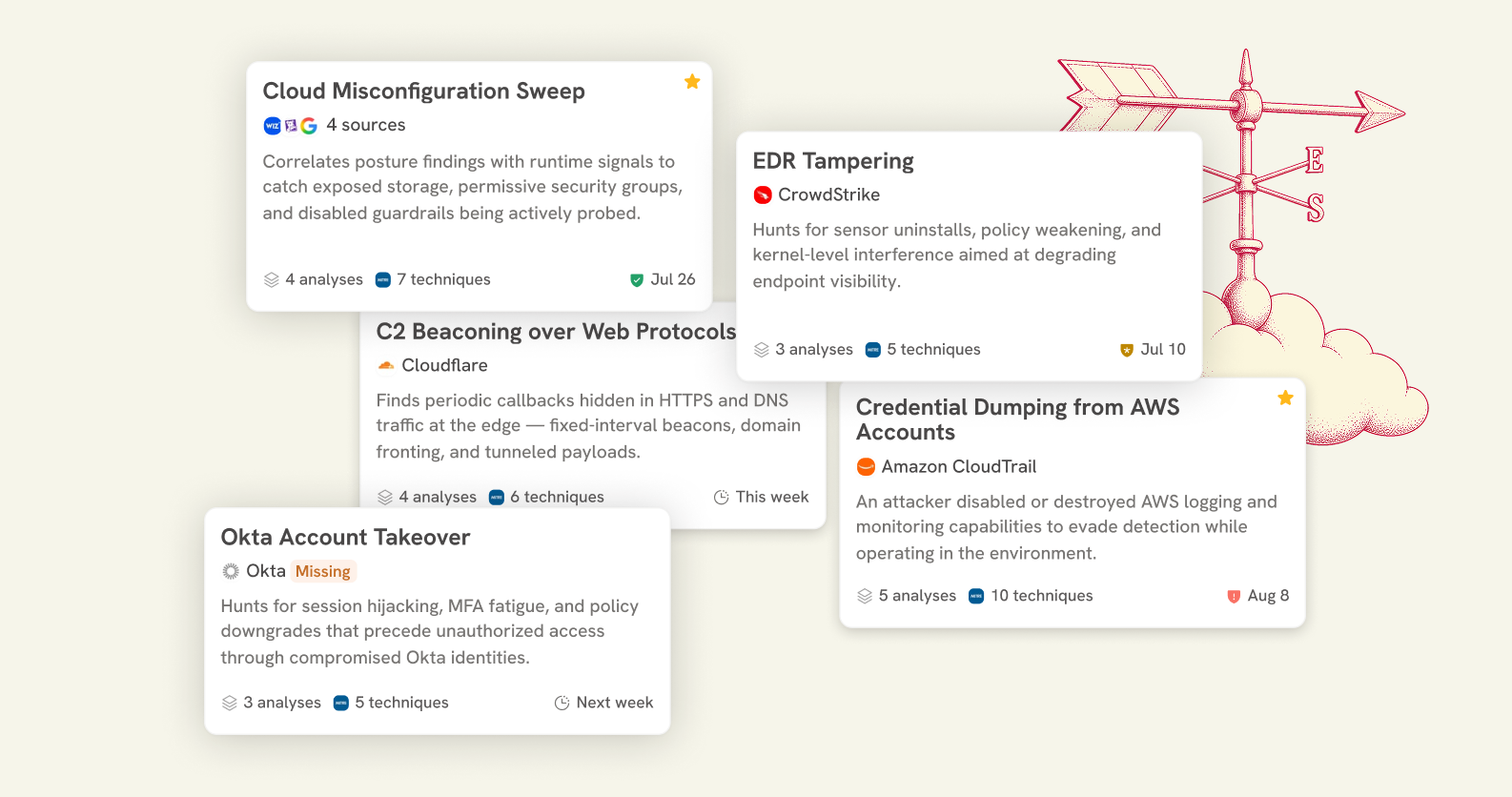
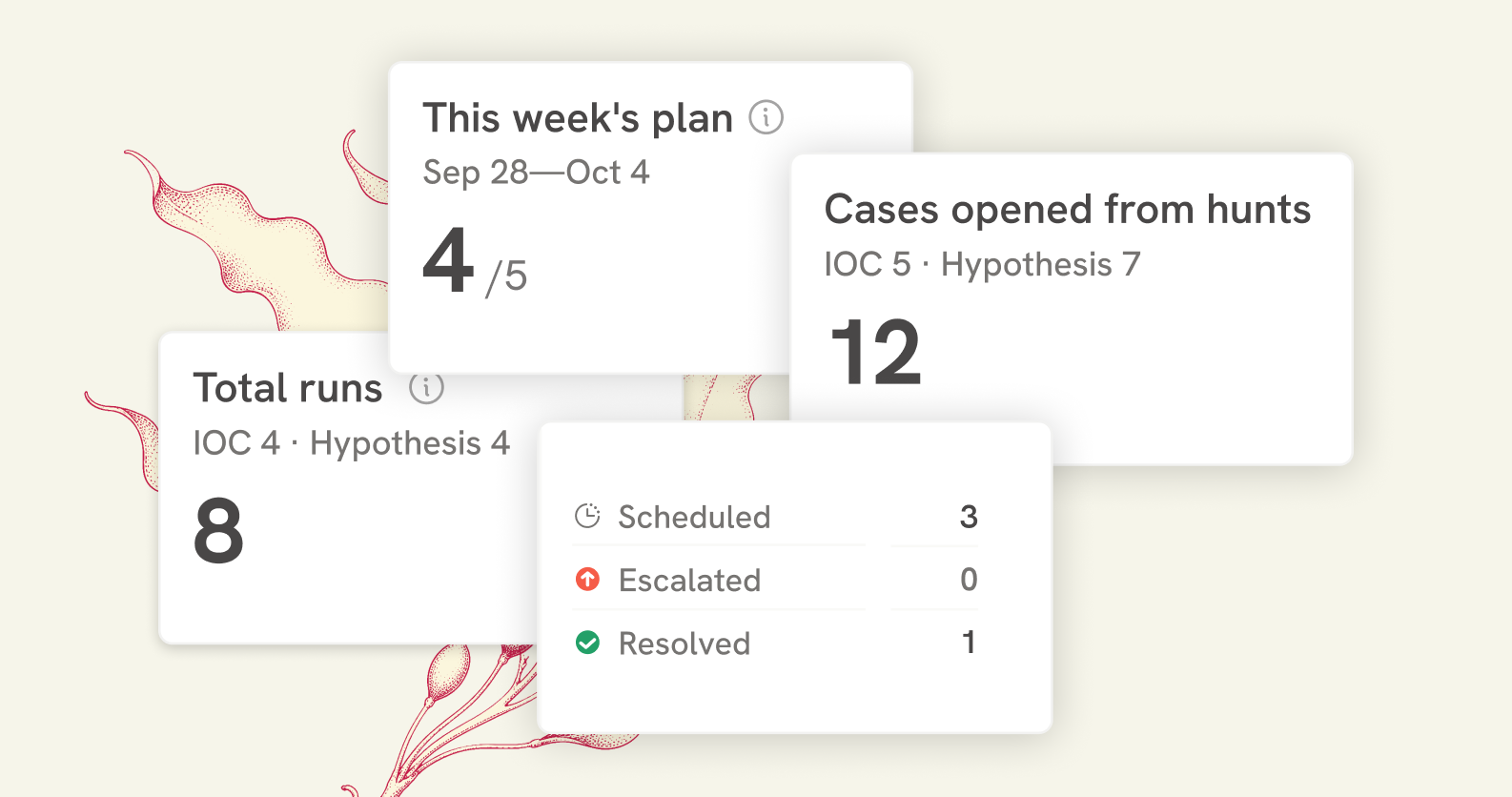
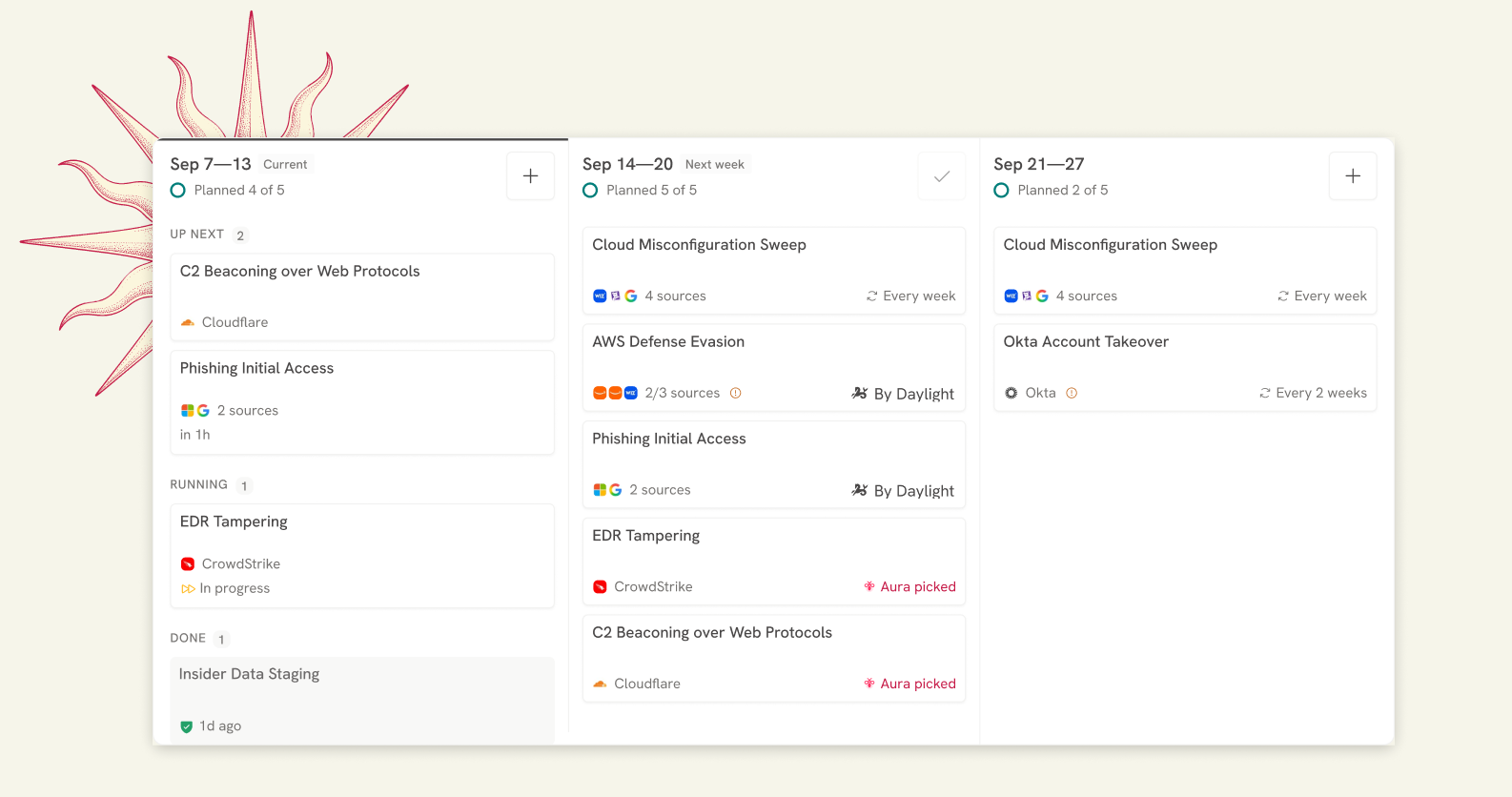
AI agents execute hunts in parallel across your environment, following evidence and adapting the investigation as new findings emerge.
Daylight adds the investigation and response layer that turns DLP signals into closed cases.
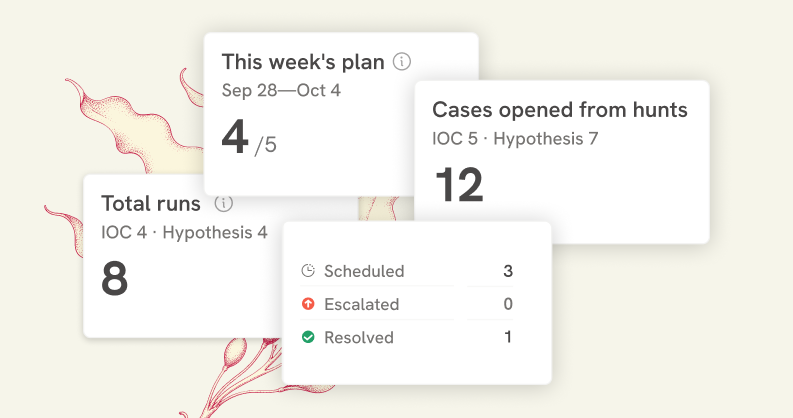
Hunts no longer depend on analyst availability or a quarterly schedule. Daylight keeps looking as your environment, intelligence, and adversaries change.
See where the hunt leads
Expert direction sets the hunt. AI carries it forward across your environment, adapting to what it finds along the way.

Hypothesis-Based Hunts
Daylight continuously hunts across your environment using hypotheses shaped by threat intelligence and your business context. AI adapts as it finds new evidence, connecting activity across sources to uncover threats traditional detections miss.
Emerging Threat Hunts
As new vulnerabilities, campaigns, and supply-chain attacks emerge, Daylight turns threat intelligence into proactive hunts to determine whether your environment is exposed.
IOC Hunts
Search across your environment for malicious IPs, domains, hashes, identities, and other indicators. Daylight investigates matches and delivers a documented conclusion on whether suspicious activity was found.
Validate the known, root out the unknown
IOC- and hypothesis-based hunts cover both what you know to look for and what you don’t.

IOC-Based Hunts
Search for known indicators tied to new vulnerabilities, threat intelligence, or your own inputs across up to 90 days of historical telemetry. Daylight correlates activity across your environment to confirm whether the threat is present or rule it out.

Hypothesis-Based Hunts
Test expert-defined hypotheses against suspicious behaviors and attack patterns across your environment. AI agents investigate dynamically, following findings beyond predefined queries and turning what they uncover into investigations or new detections.

A different model changes the hunt
Go beyond periodic or predefined.
Capability
Daylight
Traditional Hunting
Automated Hunting Tools



Built to follow evidence, not playbooks
Every part of Daylight’s threat hunting model is built to keep the hunt moving, adapting to what it finds without sacrificing expert judgment or control.

End-to-End Execution
Daylight carries each hunt from its starting question through investigation and outcome, without requiring an analyst to drive every step.

Beyond Known Indicators
Expert-defined hypotheses uncover behaviors, patterns, and attack paths that known indicators and existing detections can miss.

Adaptive Investigation
Each finding determines what happens next, allowing Daylight to pursue evidence dynamically instead of following a fixed sequence of queries.

Parallel
Execution
Multiple hunts run simultaneously across your environment without competing for analyst time.

Controlled and Auditable
Every hunt operates within defined limits, with each step and decision recorded from start to finish.
Security work doesn’t stop at threat hunting
Agentic Security Data Lake
The essentials of a SIEM without the complexity and cost.

Agentic MDR
Continuous investigation and response across your entire environment.

Managed SIEM
Detection engineering, investigation, and response in the SIEM you already own.

Proof over promises
Hear from the security leaders putting Daylight to work.

“Standing up an equivalent operation internally would mean building a SOC with detection engineering, threat hunting, incident response, and round-the-clock monitoring. That is a multi-year organizational build. Daylight delivered that maturity on day one.”

“We're not just buying alert triage. We're getting a team that actually understands our environment and thinks about our risk the way we do. That's the difference between a vendor and a partner.”

“I don’t need to hire another engineer. I know Daylight can handle it.”


Good hunting



Frequently asked questions
Threat hunting is the proactive process of searching for malicious activity that has not been identified by existing security alerts or detections. Threat hunters analyze telemetry, attacker behaviors, and threat intelligence to uncover hidden threats. Unlike reactive monitoring, threat hunting starts with a hypothesis or investigative lead and actively searches for supporting evidence.
Indicator of compromise (IOC) based threat hunting searches for known malicious artifacts such as IP addresses, domains, file hashes, or other indicators. Hypothesis-based threat hunting starts with a hypothesis about possible attacker behavior and investigates whether evidence supports it. IOC hunting identifies known threats, while hypothesis-based hunting focuses on behaviors and can uncover previously undetected techniques.
Agentic threat hunting uses AI agents to plan, execute, and adapt security investigations across multiple data sources. Unlike fixed automation workflows, agentic systems can formulate investigative steps, query telemetry, evaluate evidence, and pursue new leads based on findings. Human security experts provide oversight and judgment, particularly when investigations require complex interpretation or response decisions.
Threat hunting proactively searches for threats that existing detections may have missed, while managed detection and response (MDR) continuously monitors, investigates, and responds to suspicious activity. MDR typically includes alert-driven workflows, whereas hunting begins with hypotheses or intelligence-driven leads. The two complement each other by improving detection coverage and identifying hidden threats, and many MDR providers offer some level of threat hunting on top of their other services.
Threat hunting should be performed continuously or on a recurring schedule based on an organization's risk profile, available resources, and threat exposure. High-risk environments benefit from ongoing hunting, while others may use weekly or monthly campaigns. Effective programs also initiate hunts when new vulnerabilities, attacker techniques, or relevant threat intelligence emerge.
Threat hunting can be partially automated through AI agents, analytics, and security orchestration. Automation can collect evidence, query telemetry, correlate indicators, and investigate suspicious patterns at scale. More advanced agentic approaches can adapt investigative steps based on findings. Human expertise remains important for developing hypotheses, interpreting ambiguous evidence, and validating complex threats.
