






Keep everything,find anything
A security data lake to replace your SIEM. Search all your security data without the cost, complexity, or operational burden of a traditional SIEM.

Keeping security data is easy, keeping it useful hasn’t been
Security teams have had to choose between data they can afford to keep and data they can actually use.
Stored, but not searchable
Basic retention keeps your security data around, but gives you no meaningful way to explore it when you need answers.

Powerful, but expensive
SIEMs make security data searchable, but the cost and operational overhead make keeping everything impractical.

Accessible, but not to you
When access to your telemetry lives with your MDR, answering a historical question means asking someone else to find it for you.

Nowhere to hide
A SIEM replacement without the operational overhead.
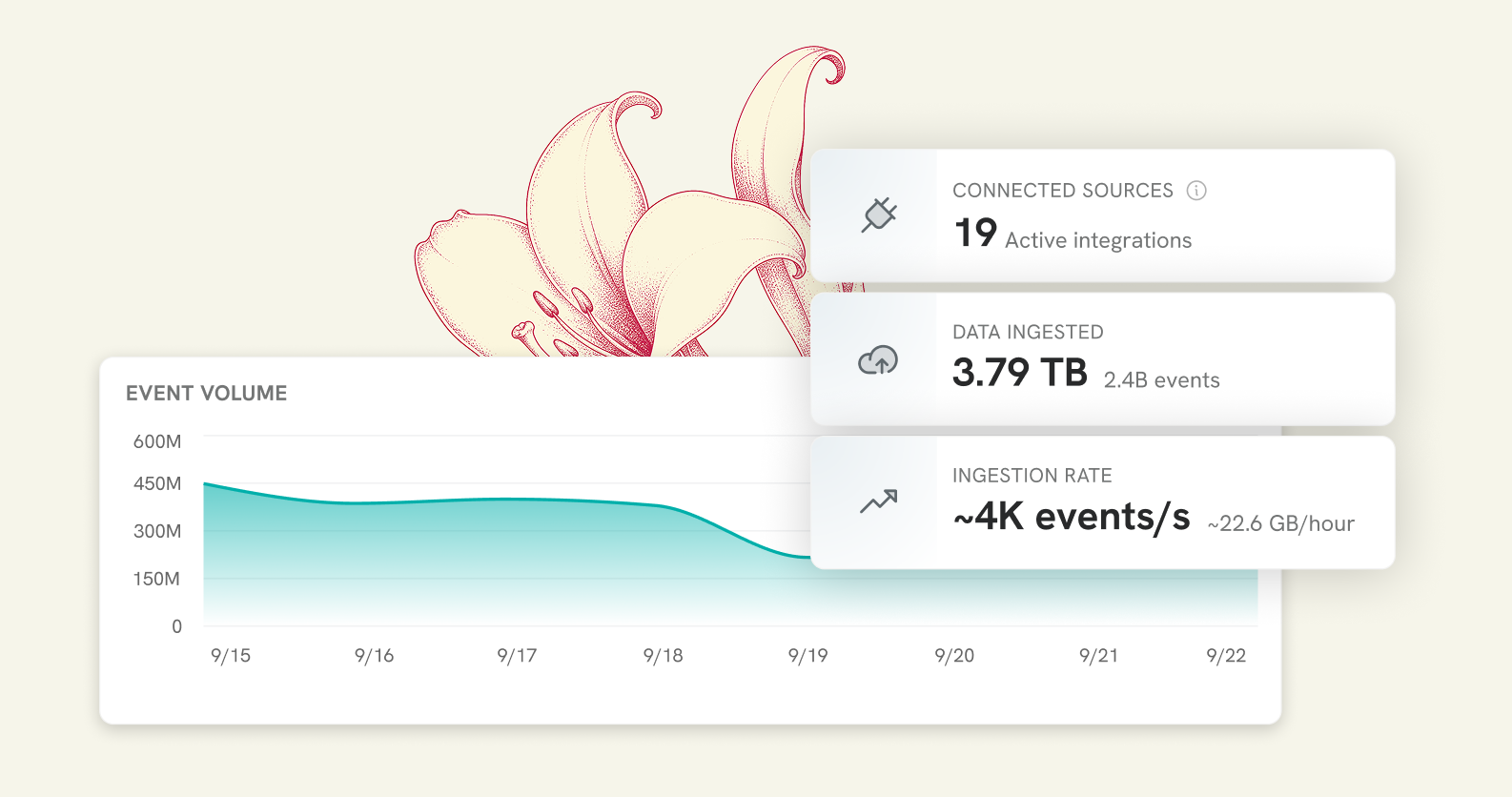
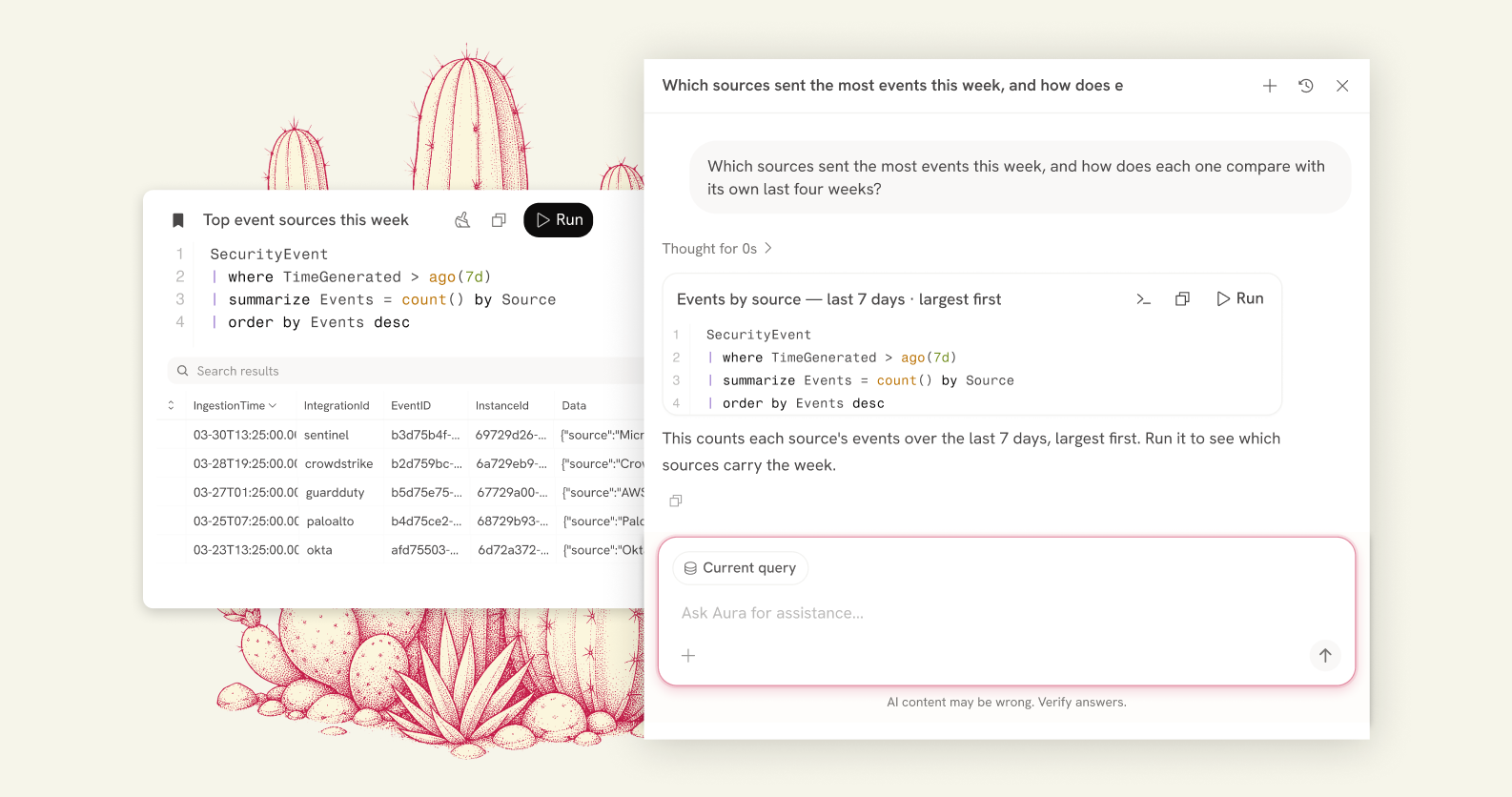
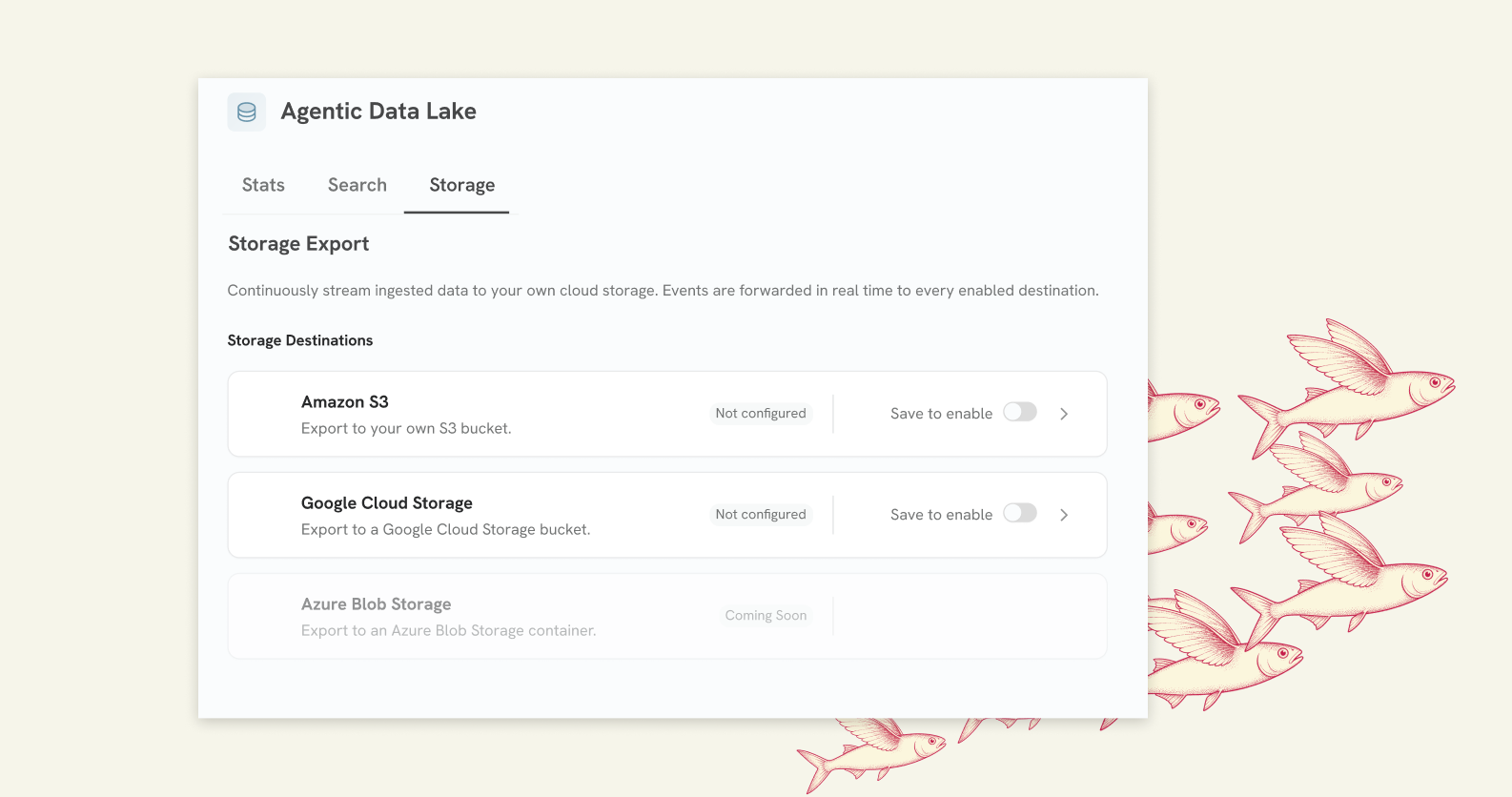
Security telemetry flows from the same integrations already powering Daylight’s MDR and threat hunting, without a separate data pipeline to build or maintain.
Recent data stays immediately searchable while older telemetry moves to lower-cost storage, ready to be brought back when you need it.
Search and explore your security data yourself, using plain English or KQL, without going through Daylight to get answers.
From question to answer
Ask Aura in plain English or write your own query. Daylight searches across your security data and brings the answer into view.

Discover what’s in your environment
Which AI tools were accessed in the last 3 days?
Ask a question in plain English. Daylight turns it into the query, searches across your telemetry, and returns the answer—without you needing to know where the data lives, if a tool is sanctioned, or how it’s structured.
Investigate what happened
Have any of these IPs appeared in other cases?
Follow an indicator across your security history. Daylight connects activity across cases and retained telemetry so you can see where it appeared, what happened, and how those events were resolved.
Query exactly what you need
Show me every failed login in the last 24 hours.
Ask a question in plain English. Daylight turns it into the query, searches across your telemetry, and returns the answer—without you needing to know where the data lives, if a tool is sanctioned, or how it’s structured.
Need something from your data? Just ask
Long-term retention keeps your security history available. Agentic search makes it immediately useful.
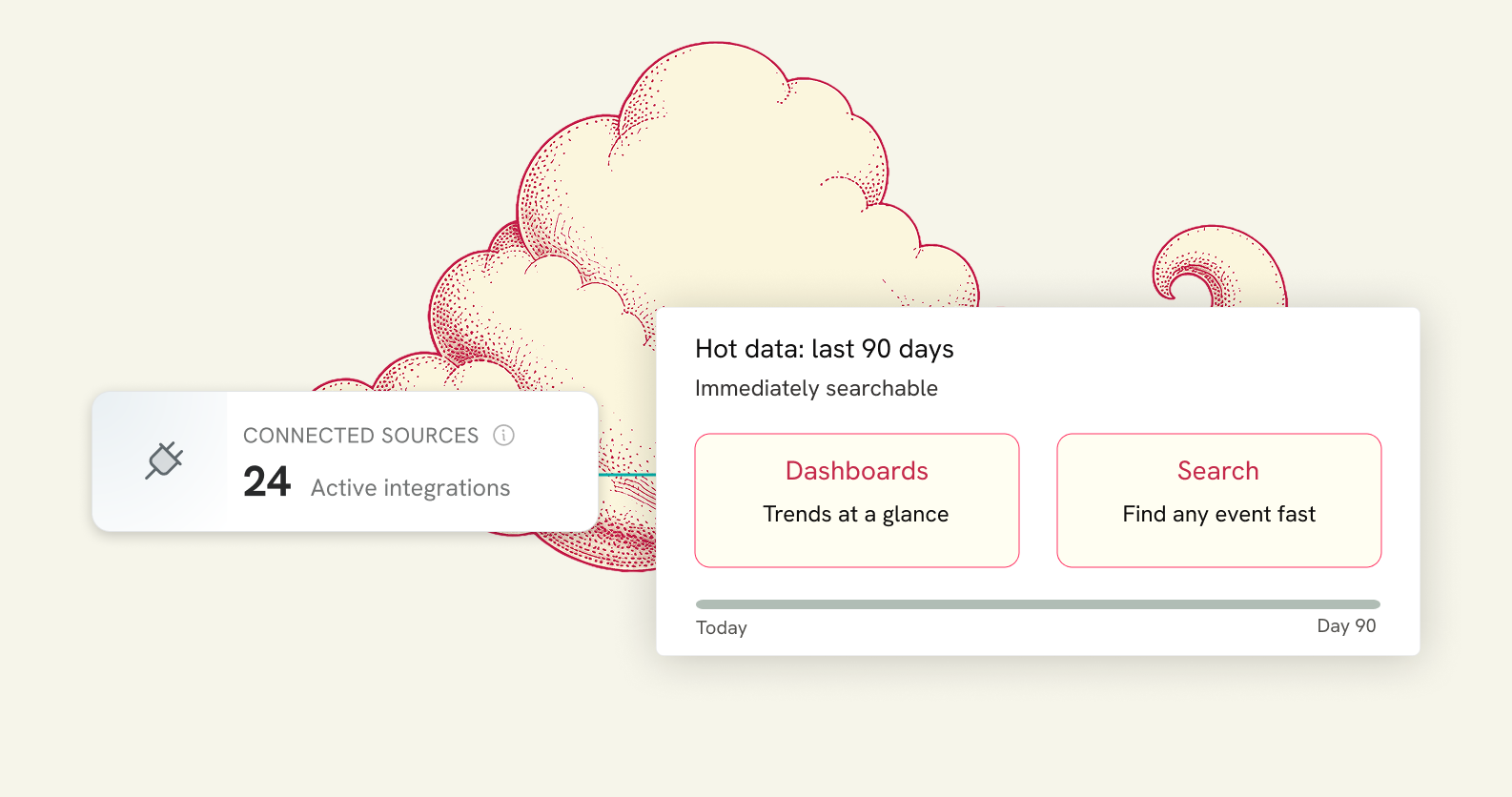
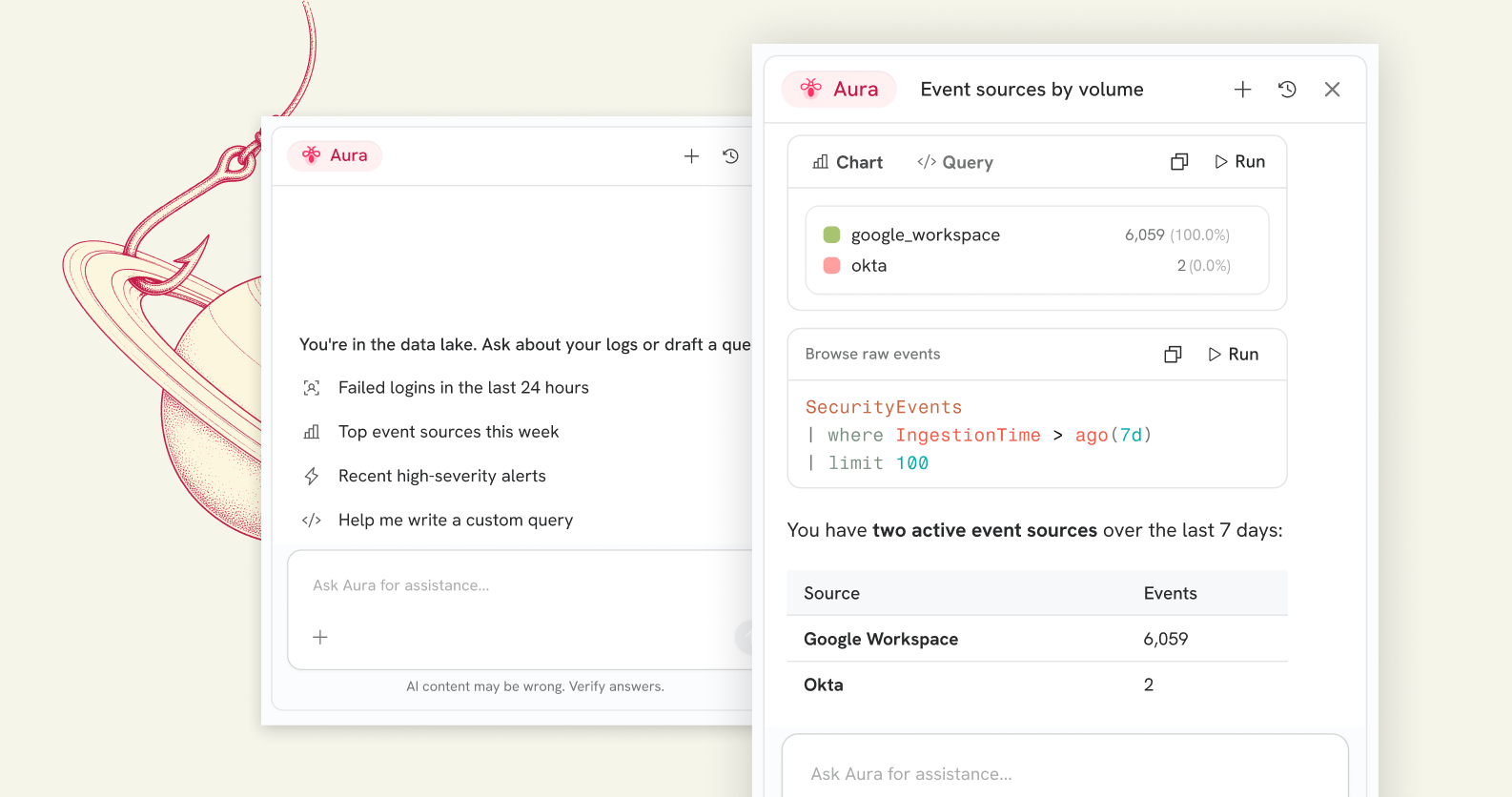

Keep 90 days of telemetry hot and immediately searchable, with older data archived at lower cost and ready to rehydrate for historical investigations, audits, and compliance.
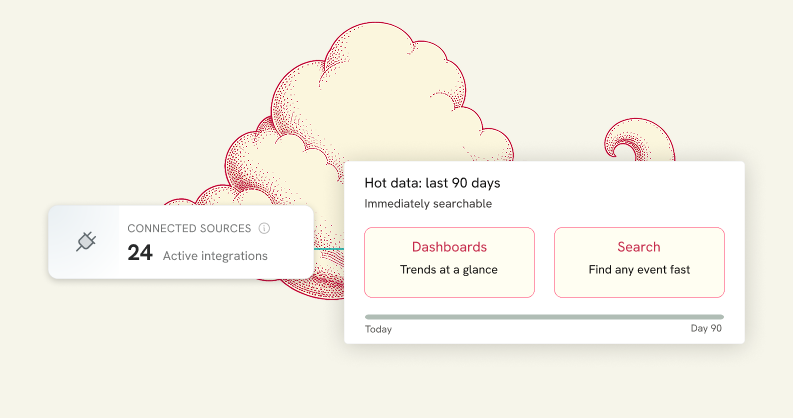
Ask questions in plain English and let AI build and execute the queries, return visual results, explain its reasoning, and carry context forward as you keep digging.

A different model means
different economics
Get more from your security data without taking on more infrastructure.
Capability
Daylight
SIEM
Basic Log Management




Your data, without the baggage
Daylight keeps your security data accessible and useful without turning it into another platform your team has to operate.

AI as the Interface
Ask questions in plain English or query directly in KQL. AI makes the data easier to use without limiting how you access it.

No Normalization Required
Raw telemetry stays exactly as it arrives, without parsers, pipelines, or schemas required before it becomes searchable.

Fully Managed
Daylight handles the infrastructure, storage, and data operations so your team can focus on using the data, not maintaining it.

Built for Security Operations
The same telemetry powering Daylight MDR and threat hunting is available for your own searches and investigations.

Investigation-Ready Data
Explore what happened, when, across which systems, and why using the security data you’ve already retained.
Security work doesn’t stop at data lake
Agentic Threat Hunting
Continuous IOC- and hypothesis-based hunts across your environment.

Agentic MDR
Continuous investigation and response across your entire environment.

Managed SIEM
Detection engineering, investigation, and response in the SIEM you already own.

Proof over promises
Hear from the security leaders putting Daylight to work.

“Standing up an equivalent operation internally would mean building a SOC with detection engineering, threat hunting, incident response, and round-the-clock monitoring. That is a multi-year organizational build. Daylight delivered that maturity on day one.”

“We're not just buying alert triage. We're getting a team that actually understands our environment and thinks about our risk the way we do. That's the difference between a vendor and a partner.”

“I don’t need to hire another engineer. I know Daylight can handle it.”


Don’t lose the trail



Frequently asked questions
A security data lake is a centralized repository that stores large volumes of security telemetry from endpoints, networks, cloud services, identities, and applications. Unlike systems that require extensive preprocessing before ingestion, data lakes can retain information in flexible formats. Security teams use this data for investigations, threat hunting, analytics, historical analysis, and to store data for compliance reasons.
A security data lake can replace some SIEM functions, particularly large-scale data storage, historical search, and security analytics. However, traditional SIEM platforms also enable the creation of detection rules, alerting, correlation, and operational workflows. Whether a data lake can replace a SIEM depends on the detection, investigation, and response capabilities built around it.
Log management focuses on collecting, storing, searching, and maintaining logs for operational visibility, troubleshooting, and compliance. A security data lake supports broader security analytics by combining logs with other telemetry, contextual information, and historical data. Data lakes can support complex investigations and threat hunting across multiple sources without requiring every dataset to follow the same structure. Data lakes can also be used for log management.
A security data lake does not necessarily require all data to be normalized before storage. Many architectures retain raw or semi-structured telemetry and apply normalization when data is queried or analyzed. However, consistent schemas and contextual enrichment can improve correlation, investigation accuracy, and interoperability across security tools and data sources.
An agentic security data lake combines centralized security data with AI agents capable of investigating threats and executing analytical workflows. Rather than requiring analysts to manually construct every query, agents can retrieve relevant telemetry, correlate evidence, and pursue investigative leads. This makes security data more actionable across detection, investigation, and threat hunting.
Security data retention depends on regulatory requirements, investigation needs, data volume, and storage costs. Organizations may retain searchable security telemetry for months and archive selected data for longer periods. Retention policies should balance compliance obligations with the ability to investigate historical incidents, identify long-running attacks, and support threat hunting.
