







MDR withoutthe breaking point
Every alert investigated in full. Every real threat owned through resolution. AI runs the investigations. Security experts bring the judgment and accountability to see them through.

Cracks were inevitable in traditional MDR services
As environments expand, MDR models stretch beyond their original design.
The limits of scalability
Traditional MDR scales linearly. Threats compound. The math only gets worse.

The fragmentation of context
Investigations span identity, cloud, endpoint, and business systems. Treated in isolation, verdicts suffer.

The loss of trust
When responsibility is scattered and decisions are opaque, ownership disappears—and trust with it.

Stop fixing it, start fresh
Daylight’s new model for managed detection and response unifies the scale of AI with the hands-on judgment of a human SOC. Preserving the best of both worlds.
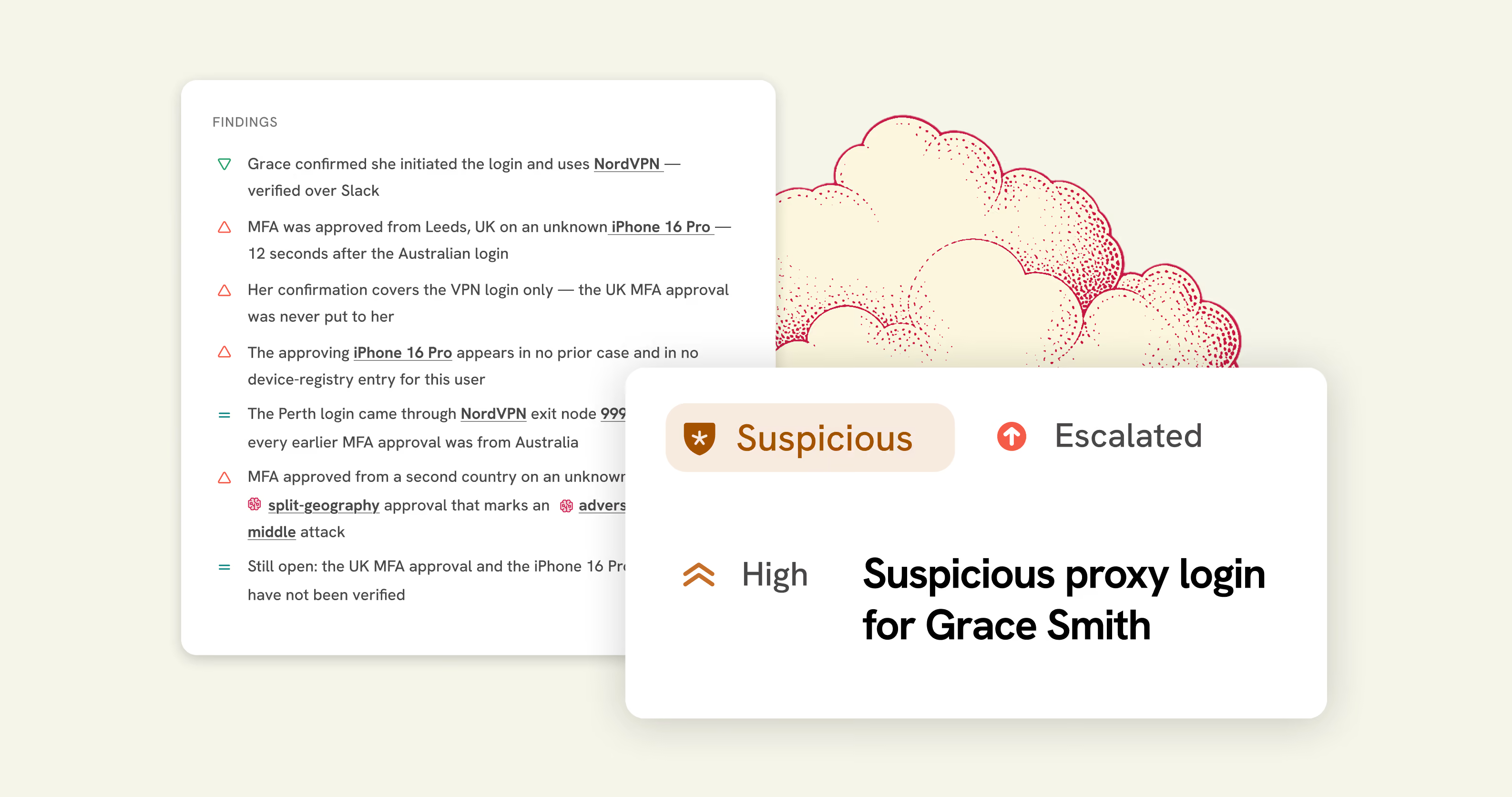
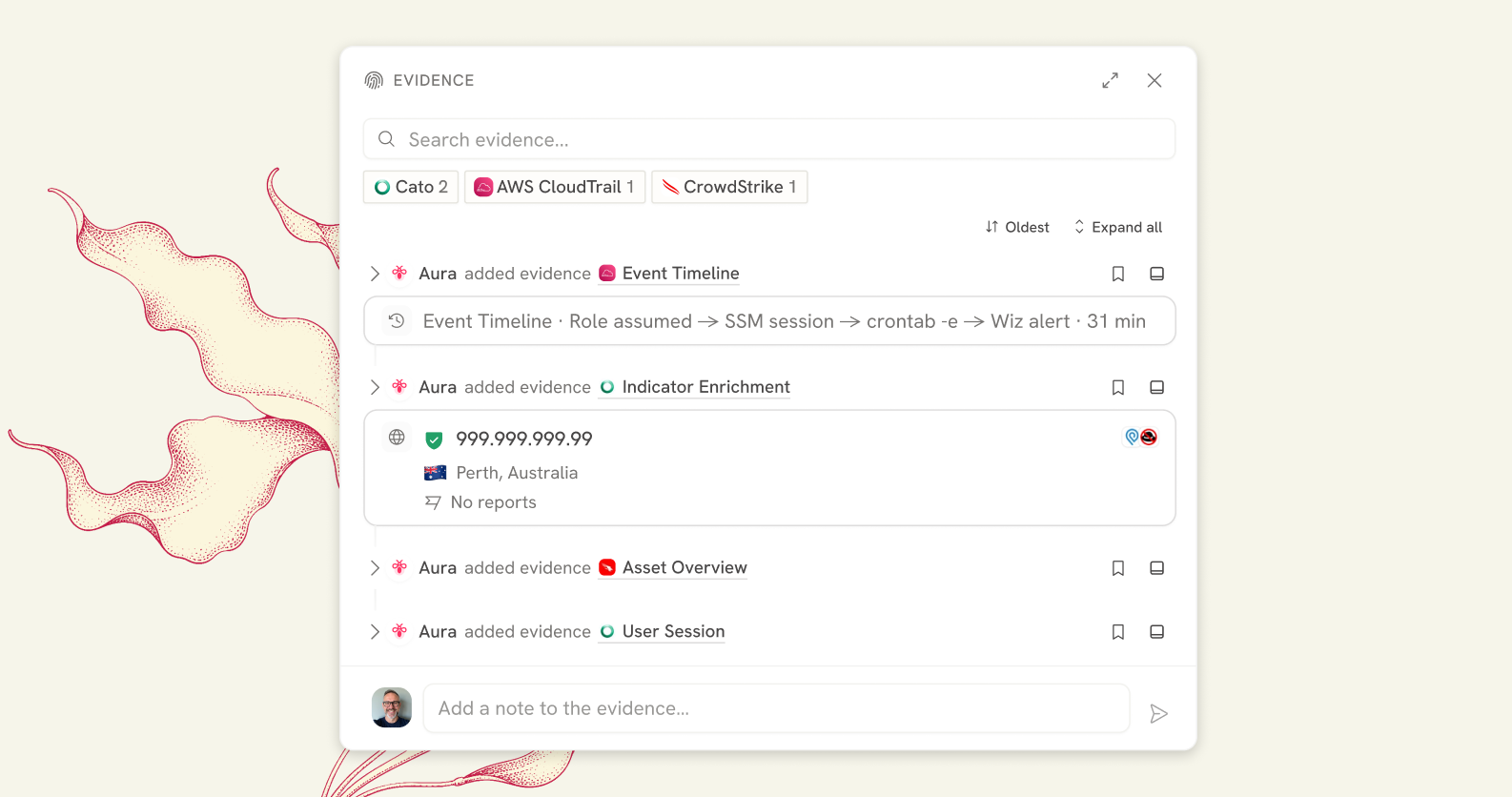
Every investigation begins with identity, cloud, endpoint, SaaS, and historical context. A complete picture before any decision is made.
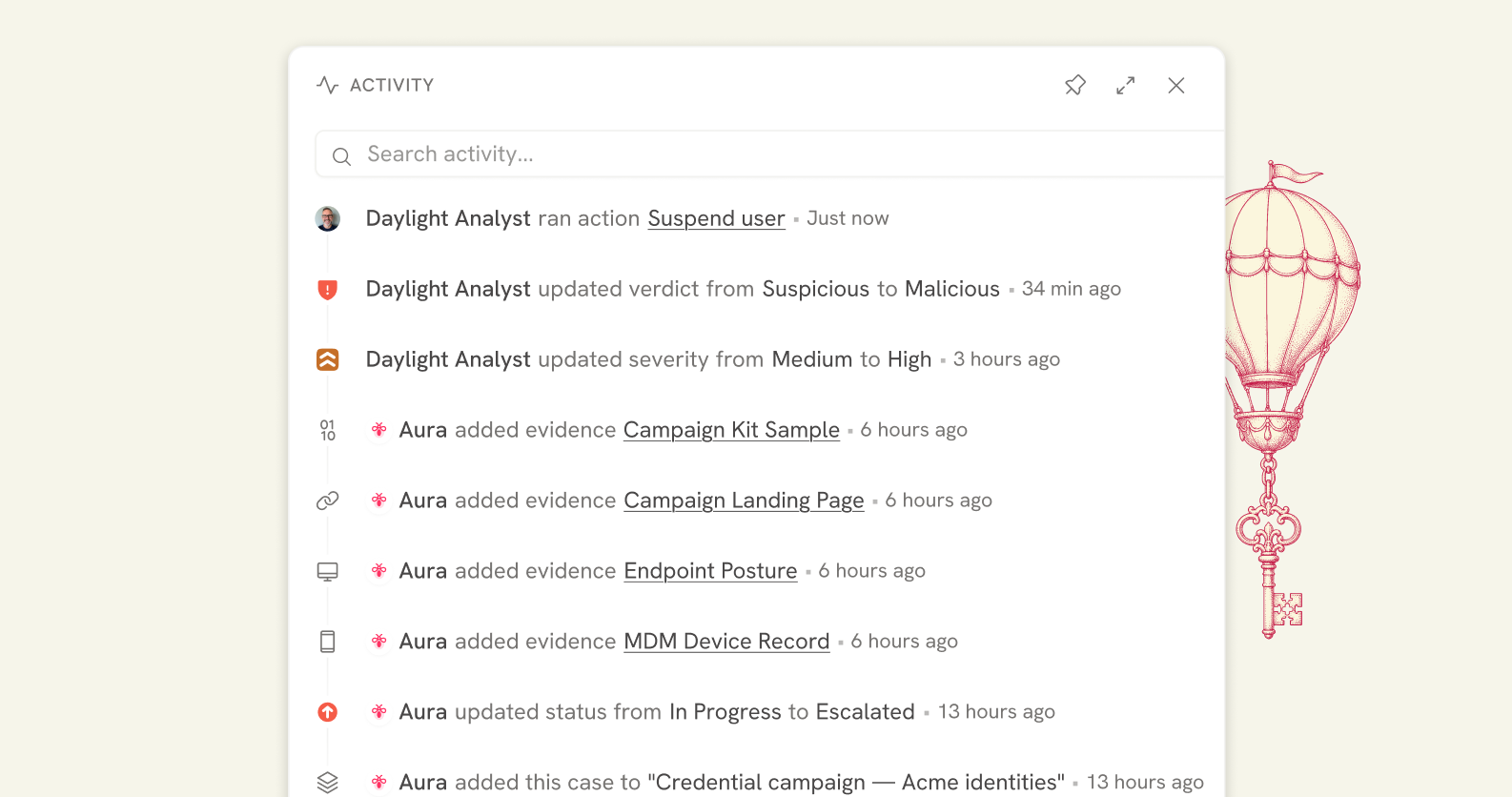
Every next step is driven by what the evidence reveals—not a fixed playbook—so investigations adapt dynamically as new information is uncovered.
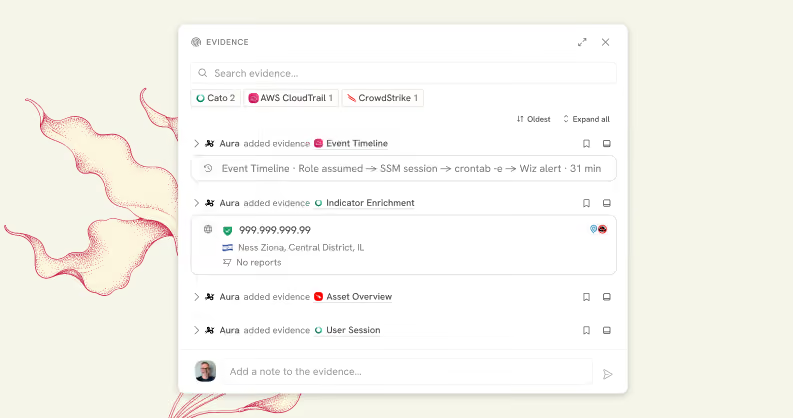
From alert ingestion to resolution, Daylight owns the full detection-to-response cycle with contractual accountability.
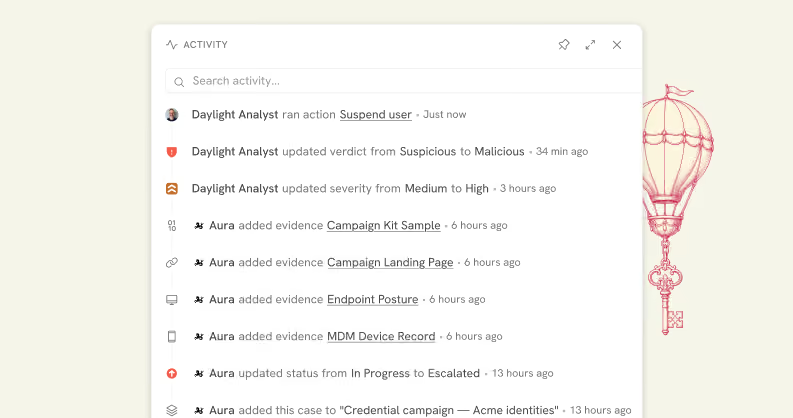
One system, from signal to owned outcome
Unified context, agentic investigation, and human validation. Daylight’s Managed Detection and Response has no fixed playbook and no black box.

Detection visibility
Know exactly where you're covered, and where you aren't.
Daylight maps your entire detection surface against MITRE ATT&CK, seeing every rule from each source, scored against the techniques attackers actually use.
See active coverage, gaps, and what needs attention.
Agentic investigation
Investigation starts the moment a detection fires.
Daylight dynamically adapts investigation to evidence across identity, endpoint, network, and cloud until the full picture is established. Every step is traceable, and no fixed playbooks.
Verdict
Get a conclusion, not another alert.
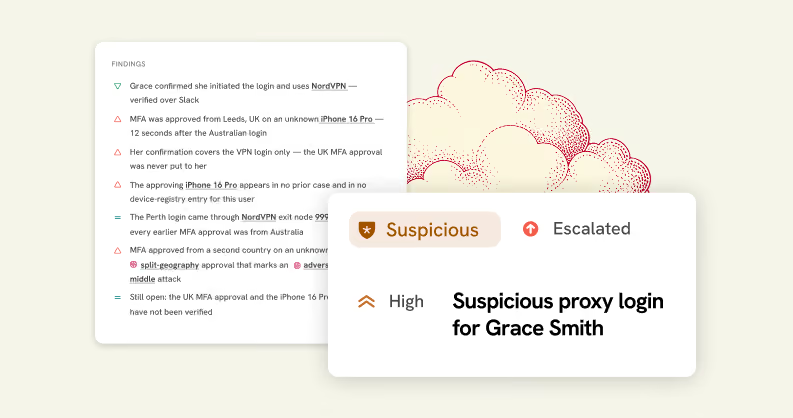
Daylight weighs the investigation against your environment and past cases to deliver a definitive, explainable verdict your team can trust and verify.
Agentic response and communications
From verdict to resolution.
Daylight drives remediation to completion for every confirmed case, like revoking sessions, resetting credentials, and blocking IPs. Your team stays updated and controls every action along the way.
Coverage that expands with what you need
Each capability uses Daylight’s full MDR workflow.
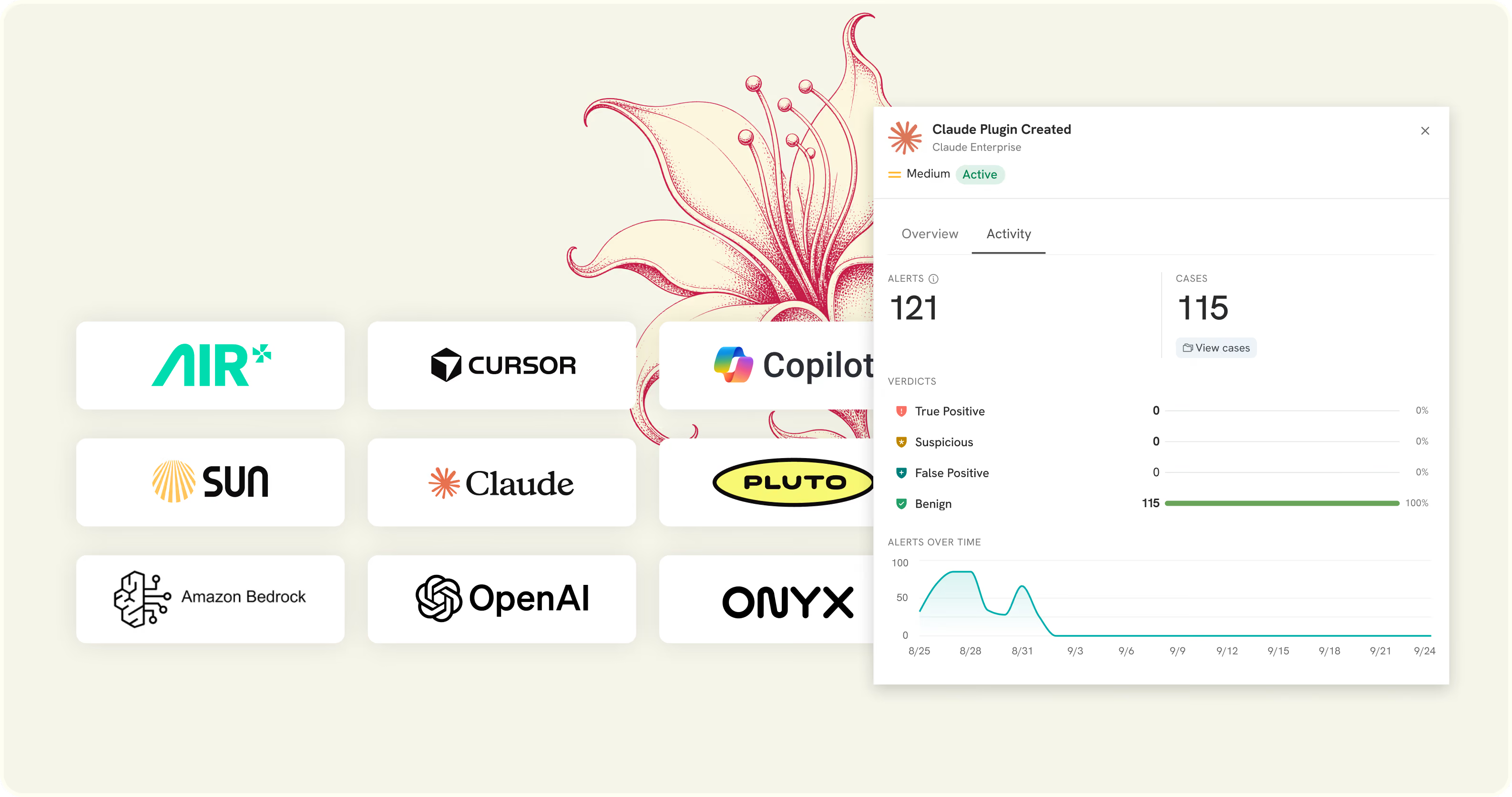
True detection coverage for AI systems, not just an audit-log view. Every action translated into detection, investigation, and response.
See AI SecurityDaylight adds the investigation and response layer that turns DLP signals into closed cases.
See DLPEvery user-reported email and security alert needs investigation. Daylight handles that operational workload around the clock, as part of MDR.
See Phishing

A different model means different outcomes
Choose architectural, not incremental.
Capability
Daylight
Traditional MDR
AI SOC



Built together, not bolted together
From architecture to operations, every capability was designed to eliminate the compromises of traditional MDR from the start.

Built for AI
AI is the foundation of the operating model, not an add-on to a human-first service.

Real Ownership
Seasoned experts own every threat through resolution. No ticket queues. No handoffs.

Autonomous Investigation
Agents keep every investigation moving from signal to verdict, without waiting for someone to pick it up.

Traceable Verdicts
Every verdict comes with the evidence and reasoning behind it, so you always know how Daylight got there.

Zero Backlog
Every alert gets investigated as it comes in, while existing backlogs are cleared within three weeks of onboarding.

Deep Integrations
AI-assisted onboarding and 120+ integrations get your environment connected in days.
Security work doesn’t stop at MDR
Agentic Threat Hunting
Continuous IOC- and hypothesis-based hunts across your environment.

Agentic Security Data Lake
The essentials of a SIEM without the complexity and cost.

Managed SIEM
Detection engineering, investigation, and response in the SIEM you already own.

Proof over promises
Hear from the security leaders putting Daylight to work.

“Standing up an equivalent operation internally would mean building a SOC with detection engineering, threat hunting, incident response, and round-the-clock monitoring. That is a multi-year organizational build. Daylight delivered that maturity on day one.”

“We have confidence that security is being handled, even as things change. That’s critical for a company growing at our pace.”


“I don’t need to hire another engineer. I know Daylight can handle it.”


Your new MDR starts with a conversation



Frequently asked questions
Managed detection and response (MDR) is a cybersecurity service that continuously monitors, investigates, and responds to threats across an organization's environment. MDR combines security technology with expert-led operations to identify malicious activity, validate threats, and take action. It helps organizations maintain 24/7 security coverage without building and staffing an entire security operations center.
An autonomous or AI security operations center (AI SOC) uses artificial intelligence to automate security operations, including alert triage, investigation, and response. AI SOC platforms use AI agents to analyze security data and execute workflows with varying levels of human involvement. Unlike managed services, many AI SOC products still require customers to operate and oversee the technology.
Endpoint detection and response (EDR) is a technology that gains deep visibility into endpoints like laptops, workstations, and servers by collecting telemetry. EDR tools generate alerts based on suspicious activity, but security teams also use these tools to develop custom detection libraries, conduct threat hunts, and perform retroactive incident response investigations. Managed detection and response (MDR) is a service that investigates and responds to threats across multiple security tools and environments, including endpoints, identities, cloud services, email systems, and network devices.
Managed detection and response (MDR) focuses on actively detecting, investigating, and responding to security threats. A managed security service provider (MSSP) traditionally focuses on managing security tools, monitoring alerts, and maintaining infrastructure. While offerings increasingly overlap, MDR generally emphasizes threat investigation and response outcomes rather than monitoring and technology administration alone. Generally, MSSPs offer breadth of coverage across a wide set of tools whereas MDRs offer more depth of coverage across a narrower set of tools.
An MDR provider should deliver continuous threat monitoring, thorough investigations, rapid response, and clear accountability. Evaluate the provider's integration capabilities, visibility into investigations, detection engineering capabilities, false-positive handling, reporting features, and ability to work with your existing team. Look for flexible service models, transparent communication, and evidence that the provider resolves threats rather than simply escalating alerts.
AI agents and human security analysts work together in MDR by combining automated investigation and response with expert judgment. AI agents handle repetitive tasks, correlate evidence, and investigate threats at scale. Human experts oversee complex decisions, validate outcomes, and provide accountability. Together, they help security teams respond faster without sacrificing investigation quality.
Daylight supports collaborative security operations through flexible service models. With Co-Managed services, your team retains the responsibilities it wants while Daylight handles the rest, with both working in Aura. A Forward-Deployed Engineer (FDE) can also work directly within your team. Fully Managed services are available when you want Daylight to own the work end to end.
