What Is SOAR? Security Orchestration, Automation & Response

.avif)
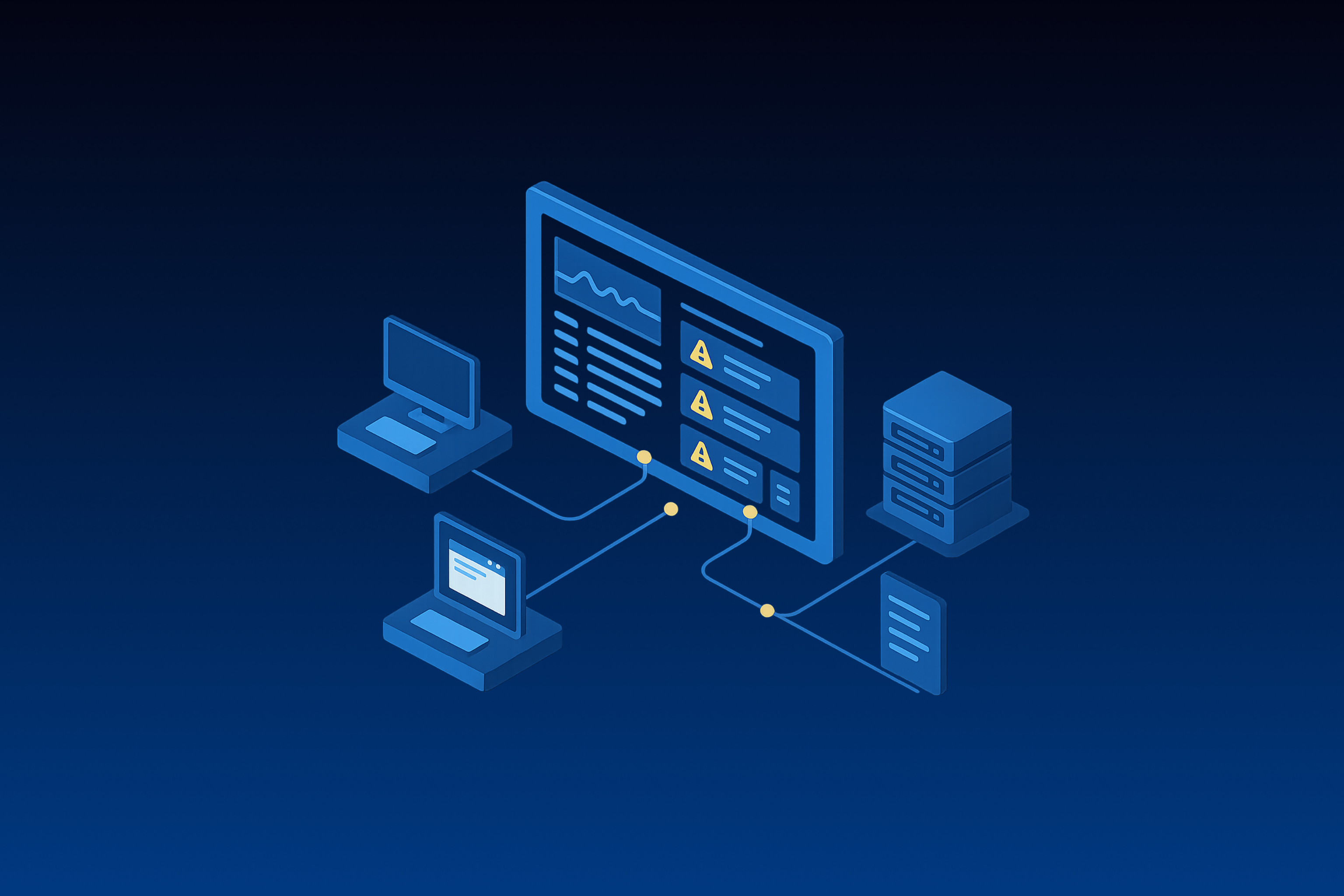
SOAR is a security platform that combines orchestration, automation, and response so teams can coordinate their tools and run predefined incident handling workflows. The orchestration value is real, and response automation remains useful in modern SOCs.
The category's difficulty shows up at scale. A playbook that works the day it ships begins to drift the moment an email gateway changes its API or an EDR vendor pushes an update, and an auto-quarantine action can fail silently for weeks before anyone catches it. Keeping that deterministic logic aligned with a changing environment becomes a standing job of its own. That gap between promise and reality is what defines SOAR today: deterministic playbooks have a clear operating envelope, and the market increasingly treats SOAR as a capability inside broader security operations platforms rather than a standalone category.
TL;DR:
- SOAR brings orchestration, automation, and response into a single platform, coordinating tools, executing predefined tasks, and turning detection into codified response workflows.
- The category's defining weakness is maintenance, because deterministic if/then playbooks break when tools update, environments shift, or inputs fall outside what their author anticipated, and keeping them current becomes a standing engineering job.
- Agentic AI is reshaping the model by taking on the investigative reasoning that playbooks were not built to encode, rather than running only on logic written in advance.
- The likely future is hybrid, pairing an AI reasoning layer for the investigative middle with deterministic execution for well-scoped actions like host quarantine, account disablement, and ticket updates.
What SOAR Actually Is
SOAR is a category of solutions that combine orchestration, automation, and response into a single platform that coordinates security tools and codifies incident handling processes. Gartner, which introduced the SOAR acronym in 2015 and redefined it in its current form in 2017, frames it as a single platform that brings together incident response, orchestration and automation, and threat intelligence management. Teams use it to document and run security processes such as playbooks and workflows, and to support SOC operations with machine-based assistance.
The three pillars are distinct, and conflating them is where most confusion starts.
Orchestration connects and coordinates tools across the stack: SIEM, EDR, firewalls, ticketing systems, and other security or IT systems. Orchestration owns the when, how, and in what order.
Automation handles the individual task. If one event happens, the platform performs one predefined action. Security automation reduces manual effort by completing specific tasks inside those workflows. Common automated actions include opening tickets or isolating endpoints. The same workflows can also block IP addresses or generate reports.
Response turns detection into action. The mechanism is the playbook: alert data enters the platform, triggers a predefined workflow, and coordinates human approvals, enrichment, containment, ticketing, or closure.
Gartner has called SOAR "obsolete before plateau," as Dark Reading reported, meaning the category stalled before it reached mainstream adoption. In 2024, Gartner reclassified its Peer Insights category for SOAR as transitioning into security information and event management, repositioning standalone SOAR as a feature inside SIEM.
How a SOAR Platform Works End to End
A SOAR platform turns alerts into response actions through ingestion, enrichment, triage, and predefined workflows. Each stage explains both the value and the constraint.
Ingestion and Enrichment
SOAR ingests alerts from connected security systems and aggregates them as events or incidents.
Enrichment adds context an analyst would otherwise gather by hand, such as reputation checks on artifacts, threat intelligence lookups, and correlation of indicators with internal telemetry. When enrichment works, the analyst receives a case with more context than the raw alert provided.
Triage and Automated Response
After enrichment, SOAR applies the team's predefined process to route or prioritize the alert. Then the playbook fires. The response might quarantine an endpoint, disable an account, block an IP address, open a case, route the alert to an analyst, or ask for human approval before containment.
Playbooks, Runbooks, and Workflows
These terms get used interchangeably, which creates confusion. A playbook is a codified sequence of steps that executes in response to a security alert or event, typically rendered as an executable workflow with API calls, conditional branches, enrichment steps, and human-approval gates. A runbook is a procedure for a single system or task, such as quarantining one endpoint. A workflow is a subset of tasks within a playbook.
The model rests on one assumption: that someone can anticipate the right response in advance and encode it as a directed graph. SOAR runs into trouble the moment that assumption breaks.
What SOAR Solves, and the Toll It Charges
SOAR was built to reduce alert fatigue and repetitive triage across fragmented tools. It addresses all three, and in doing so it can create a fourth.
SOCs often struggle to keep pace with alert volume and fragmented tools, especially when alert fidelity is uneven. SOAR addresses tool sprawl by integrating disparate systems into a single orchestration layer. Academic analysis of SOC management techniques describes SOAR as a way to integrate disparate security systems and coordinate automated incident response processes across them.
When playbooks work, the gains are concrete: repetitive triage steps disappear, tickets are enriched automatically, and containment can happen faster than an analyst working through the same sequence by hand. The value is strongest when the alert type is common, the inputs are stable, the decision tree is well understood, and the response action is low risk.
SOAR moves work into playbook design, testing, integration maintenance, and regression handling. That is the operational reality behind the category's absorption into SIEM and SecOps platforms.
Why Traditional SOAR Hits a Ceiling
Deterministic playbooks struggle under the exact conditions enterprise security operates in: changing tools and incomplete or unfamiliar inputs. The constraint is architectural.
The Maintenance Burden Nobody Priced In
The economics of SOAR are often calculated wrong from the start. Teams model the time saved per playbook execution but undercount the engineering required to keep integrations and branching logic aligned with a changing environment.
Carnegie Mellon SEI describes the practical burden plainly, calling it "no small feat" to deploy, connect, and maintain a SOAR platform. It also stresses that teams need experienced people who can document their processes in detail; without that documentation, the platform cannot be operationalized in a way that delivers full value.
The staffing problem compounds as playbooks multiply. Every workflow needs someone who understands the process, the tools, the APIs, the failure modes, and the approval requirements. When that knowledge sits with one architect or a small group, the platform becomes dependent on scarce internal expertise.
Brittleness Under Novel Inputs
Deterministic logic is weakest on anything its author did not foresee. A playbook can branch on known conditions, but it does not reason its way through a scenario outside the authored graph. If an enrichment source returns insufficient data or an alert contains an unmodeled pattern, the workflow can halt, misroute, or require human intervention. API response changes create the same kind of breakage.
This produces coverage ceilings. Carnegie Mellon SEI's point about process documentation matters because SOAR automates only what the team can describe. Academic analysis also cautions that SOAR faces scalability challenges in fast-changing environments and should be treated as a decision-support and orchestration layer for human analysts.
Deployment and Cost
Deployment continues after initial configuration. Teams must connect tools, test workflows, maintain integrations, update playbooks as the environment changes, and ensure that automated actions do not create business disruption. The recurring cost of that upkeep, rather than the initial license, is what most often determines whether a SOAR program pays off.
SOAR still has value inside a defined deterministic operating envelope, and many enterprises eventually exceed it.
How SOAR Relates to SIEM, XDR, and MDR
SOAR is one piece of a stack that includes SIEM, XDR, and MDR. The relationships matter for any buying decision.
SIEM shows teams what happened and when, while SOAR carries out predefined response workflows across tools. SIEM generates alerts for human review; SOAR executes automated actions and manages workflows. SIEM aggregates data; SOAR orchestrates actions across tools.
XDR overlaps with SOAR while serving a different purpose. XDR is generally centered on detection and response across telemetry sources such as endpoint, identity, cloud, and network. SOAR is centered on cross-tool process automation. In practice, many environments use both: XDR for detection context and SOAR-like capabilities for workflow execution.
MDR is a service delivery model built on top of XDR, EDR, SIEM, or SOAR tooling. MDR uses an external team to deliver monitoring, investigation, and response; XDR is a technology platform an internal team can use.
The table below summarizes what each layer does and where each one stops.
For a buying decision, the limits column is the one to study, since each layer's boundary is where teams most often assume a capability that is not actually there.
What Agentic AI Changes About Security Automation
Agentic AI changes the SOAR model. Traditional SOAR depends on investigation logic written in advance; agentic systems are designed to evaluate each alert, choose the next investigative step, and adjust when the evidence changes.
Gartner identified "AI-Driven SOC Solutions Destabilize Operational Norms" as a top cybersecurity trend for 2026, noting that AI-driven SOCs can improve alert triage while also raising staffing and cost considerations. RSA Conference similarly framed agentic AI as a shift from analytical assistant toward autonomous security actor, capable of triaging incidents, isolating hosts, and coordinating defensive actions under governance.
The investigation path separates the models. Traditional SOAR runs a fixed if/then workflow. Agentic systems are designed to collect context, decide what evidence matters, choose the next investigative step, and adapt when the first path does not answer the question. In that sense, agentic AI targets the investigative middle that deterministic playbooks struggle to encode.
Two cautions keep this honest. First, the displacement is partial. Deterministic automation is still appropriate where the action is well defined and the input is stable, such as quarantining a host, disabling an account, opening or closing a ticket, notifying a user, or updating a case. The hybrid future keeps an AI reasoning layer over a deterministic execution layer.
Second, the hype is ahead of mature production practice. Gartner predicts over 40% of agentic AI projects will be canceled by the end of 2027. Security teams evaluating agentic systems need to understand approval gates, auditability, rollback, escalation, and where human judgment remains mandatory.
Decision Criteria: When SOAR Fits and When It Doesn't
Match the automation model to your environment's maturity and the stability of your use cases.
- If you have high-volume, repetitive, low-complexity alerts with stable inputs, then traditional SOAR fits, and you should start there. These are the conditions where a predefined workflow can deliver value without requiring the platform to reason through ambiguity.
- If your SOC is immature or your processes are undocumented, then SOAR is not suitable yet. U.S. Department of Defense practitioner guidance is explicit that SOAR is "usually not suitable for immature environments." Without staff confidence and expertise, the guidance warns, an expensive deployment can simply sit unused after purchase.
- If your team distrusts alert fidelity, then fix detection quality before automating response. The SOC-CMM 2025 Maturity Report finds that response automation remains uncommon, citing limited trust in alert accuracy and concern about the business impact of automated response actions as the main factors holding back wider adoption.
- If you cannot dedicate engineering headcount to maintenance, then account for that gap before buying. DoD guidance adds that organizations not outsourcing SOAR configuration should expect to put multiple staff on these tasks full time.
- If you are evaluating an AI-driven alternative, then demand proof in an environment comparable to your own. With agentic AI projects facing a high projected cancellation rate, marketing claims can outrun deployment evidence. The real test is whether the system works against your alerts, your integrations, your approval gates, and your business context.
Across all five criteria, SOAR rewards mature, well-documented operations with stable, high-volume workflows, and struggles to deliver outside those conditions.
Why the Investigation Bottleneck Is the Real Problem
The market is moving past deterministic playbooks because the central constraint is investigative reasoning in the middle, which depends on context that does not exist in the alert and so cannot be reduced to a fixed workflow.
The distinction between triage and investigation matters here. Triage routes an alert based on severity and basic enrichment. It does not determine whether an alert is a real threat. Investigation pulls full context about who a user is, what is normal for them, and what data is sensitive. SOAR automates the routing. The judgment call still requires context that lives in policies, Slack threads, and the experience of your team, not in the alert payload.
Playbooks were useful, yet the investigative reasoning between detection and response was not something a directed graph could hold. Deterministic response actions can remain in place after a verdict exists. The part worth rethinking first is the investigative middle.
How an AI-Native Approach Addresses the Investigative Middle
The shift this article describes points somewhere specific. That reasoning in the middle is moving to systems and services built for it, while deterministic execution stays where it already performs well. That premise sits behind Daylight and its approach to AI-native MDR.
Instead of encoding investigation as preauthored logic, Daylight runs agentic investigations that assemble the telemetry, organizational, and historic context an alert does not carry on its own, reach a verdict, and coordinate the response. Its security experts stay on the judgment calls and edge cases, so the service extends an internal team rather than displacing the tools around it. The deterministic actions SOAR already handles well still belong in that picture. What changes is who owns the investigative middle between the alert and the action.
Frequently Asked Questions About SOAR
Is SOAR Dead, or Is It Just Being Absorbed Into SIEM?
Both framings are partly right. Gartner has described SOAR as obsolete before it plateaued and, in 2024, reclassified the market as transitioning into SIEM. The underlying capability still persists, though, because deterministic workflow execution remains useful for well-scoped response actions.
Why Do Prebuilt Playbook Libraries Rarely Get Used As-Is?
Because they assume a generic environment that does not match yours. Tool versions, API configurations, naming conventions, data models, enrichment sources, and approval gates differ enough that adaptation can approach the effort of authoring. Carnegie Mellon SEI's deployment guidance points to the same issue: teams need detailed workflows and experienced professionals to operationalize SOAR well.
What Is the Difference Between a Playbook and a Runbook in Practice?
A runbook handles a single system or task, such as quarantining one endpoint. A playbook is the broader orchestrated workflow that spans multiple tools and teams for a scenario, calling several runbooks in sequence. Runbooks are often manual procedures; playbooks automate and chain those procedures together with conditional logic.
How Is Agentic AI Different From the AI Assistance Some SOAR Platforms Already Advertise?
AI assistance summarizes alerts, explains events, and accelerates analyst workflows. Agentic systems are designed to plan and execute multi-step investigations, select tools, and adapt paths when they hit unexpected conditions, within guardrails.
Should I Rip Out My SOAR if I Adopt AI-Driven Investigation?
Keep useful SOAR execution paths when they still work. The emerging architecture is hybrid: an AI reasoning layer handles the investigative middle, while deterministic execution handles well-scoped actions like host quarantine, account disablement, and ticket creation. SOAR remains genuinely useful in the deterministic response layer. The investigative reasoning is the part worth replacing first.