SOAR vs SIEM: Where Each Layer Starts and Ends

.avif)
SIEM and SOAR are not competing purchases. They sit at different points in the same workflow, and the boundary between them is where the real decision lives, because the maintenance burden teams want to escape sits on one side of it and the alert volume they blame sits on the other. The credible replacements for standalone SOAR are defined by which side they absorb.
TL;DR:
- SIEM and SOAR divide at the alert. SIEM ingests raw logs and produces alerts; SOAR consumes processed alerts and executes response workflows. Upstream systems originate detections, so SOAR inherits the quality of the detection layer above it.
- Standalone SOAR is no longer a durable category. An analyst reassessment in 2024 marked it obsolete before plateau as its functionality moved into SIEM platforms and agentic systems, and some independent vendors now position their products as broader automation platforms instead.
- Maintenance economics can weaken the standalone model. Playbook upkeep grows as APIs and integrations change while coverage remains limited to the alert types teams have encoded, so the gap between coverage and reality can widen.
- The replacements split into two paths: tools you operate, or a managed service that owns investigation and response for you. Staffing is the practical constraint on which one is realistic.
Where you want the investigation and automation burden to sit drives everything after that.
Where SIEM Ends and SOAR Begins
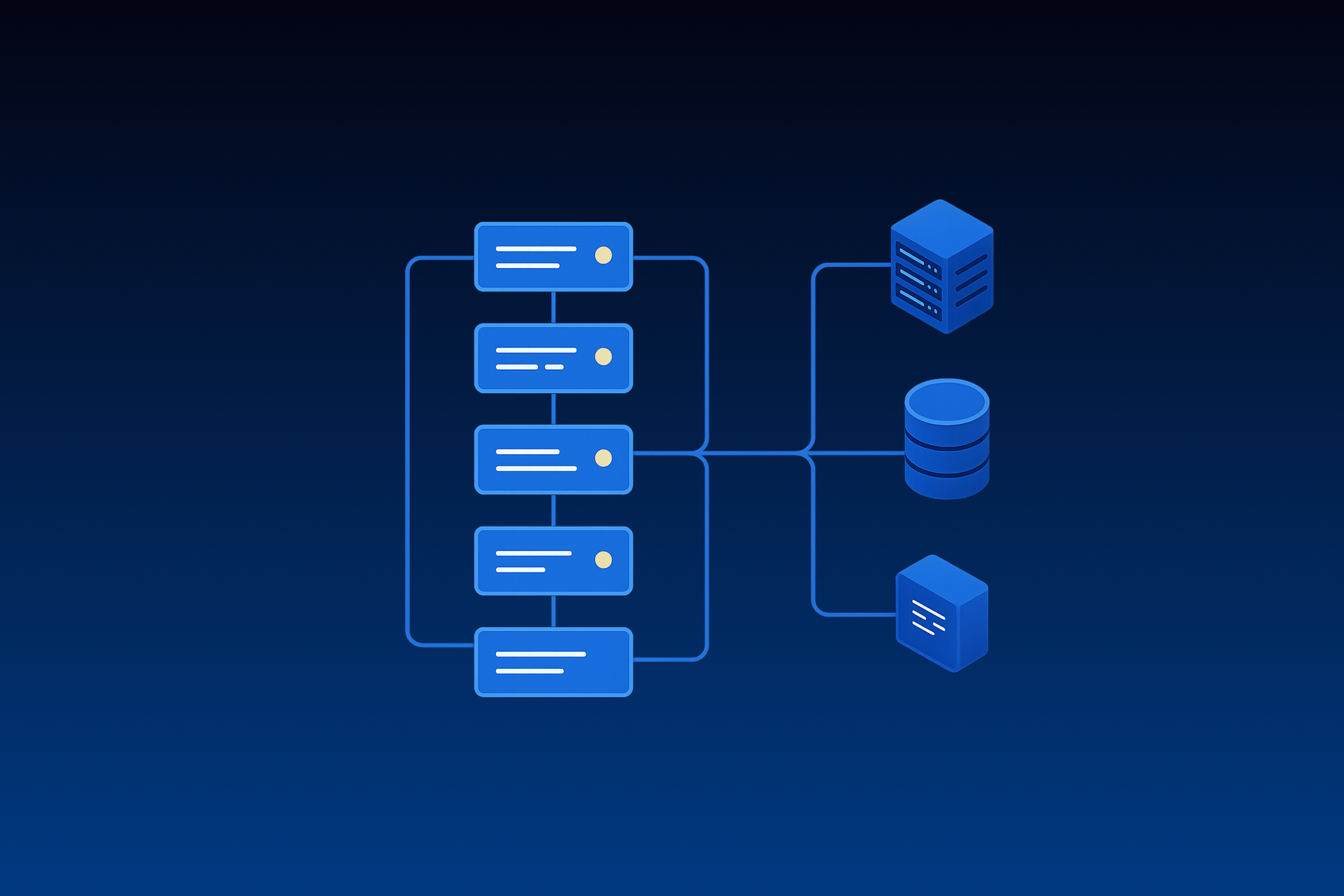
SIEM produces the alert, and SOAR consumes it. The SIEM analysis layer examines log data and fires when correlation rules or behavioral baselines match; the SOAR workflow layer takes the resulting alert and runs a structured response. SOAR typically receives processed alerts instead of collecting the underlying raw logs itself, so its results depend on the reliability of the upstream detection layer. Poorly tuned alerts become poor automation inputs and lead to unreliable outcomes. SOAR platforms generally do not originate detections; they receive them from SIEMs and tools such as EDR and IDS/IPS, then triage and act across the environment.
SIEM work centers on interpreting logs and writing correlation logic informed by attacker movement. SOAR work centers on translating response procedures into dependable automations and maintaining their API connections and playbooks. For small teams, SIEM may come first when its detection work overlaps with broader security engineering, while adopting SOAR can require dedicated automation expertise.
The split holds across every dimension that matters operationally.
The boundary is not fixed, though. The SOAR market listing is now marked as transitioning to SIEM, a sign that the two layers are merging into one platform decision.
How SIEM and SOAR Work Together in Practice
SOAR receives alerts through a handoff, and the verdicts analysts reach flow back through a feedback loop. Joint guidance from the Five Eyes agencies makes the dependency explicit: ineffective SIEM log analysis can impair an integrated SOAR platform and carry significant consequences.
Between alert and analyst, SOAR runs enrichment. On receiving a SIEM alert it can check external IP reputation against threat intelligence feeds, pull the user profile from Active Directory, query login history back in the SIEM, and verify prior EDR alerts on the workstation, potentially within seconds. Teams still need to test rule interactions so automation does not create conflicting actions.
The loop also runs backward. Mature implementations synchronize case status between security and service-management systems so closures propagate both ways, and teams feed investigation verdicts back into detection tuning. Those verdicts give teams a basis for updating detection rules or retiring them. When the loop works, automation compresses the time between alert receipt, enrichment, case creation, and analyst review from a sequence of manual handoffs into a near-real-time workflow.
Why Standalone SOAR Collapsed
Gartner's 2024 Hype Cycle changed SOAR's status to "obsolete before plateau," a designation that unsettled buyers and vendors at the time. The reasoning was less dramatic than the label, which marked a shift already well underway. The components of the category had been absorbed into other products and services, and buyers had come to expect automation as a built-in feature instead of a separate purchase. The category's scope broadened from standalone orchestration toward SecOps automation, while maintenance difficulty could undercut the operating model when teams could not sustain what they had built.
Three forces pushed the category there. The first is maintenance economics, because API and schema changes can break integrations. As a playbook library grows, each additional workflow adds APIs and schemas the team must maintain, and the demand is uneven because one upstream change can require updates across multiple connected workflows.
The second is brittleness. Deterministic if/then logic handles what its author predicted, so when an alert falls outside those expected conditions, the automation hands work back to an analyst. The team must then investigate and maintain those exceptions.
The third is coverage. SOAR was designed around known alert patterns and pre-authored responses, while modern SOCs may face more alert variations than teams can encode in advance. Coverage remains limited to alert patterns with dependable, maintained workflows, so licensing and engineering for integrations and playbooks do not guarantee broad automation.
Consolidation followed the category shift. SOAR engines can now appear within broader security analytics, SIEM, XDR, and SecOps platforms, while some independent workflow products position themselves around hyperautomation. The workflow automation concept survived; the standalone product category did not.
The Four Categories of SOAR Alternatives
Teams typically implement SOC automation in one of two ways: they buy tools and run them in-house, or they hire a managed service that owns investigation and response. The first three categories below are tools. The fourth is a service, and conflating the two is a common evaluation mistake in this market.
Ownership is what separates them. Traditional MDR and AI-native MDR are managed services that own agreed investigation and response work under contract. AI SOC is customer-operated tooling without a managed-service component, 24/7 service coverage, or contractual liability for investigation outcomes. Here, traditional MDR means a human-heavy service that may rely on deterministic SOAR automation, while AI-native MDR means a managed service that combines agentic automation with human expertise and contractual accountability for the agreed investigation and response scope.
1. AI SOC Platforms
Some AI SOC platforms use agentic reasoning alongside predefined workflows, so the system can select the next investigative step from the evidence collected so far. These platforms investigate and return findings or recommendations, but the customer remains responsible for response and its outcomes. Test the autonomy claims: check whether workflows constrain required enrichment steps and produce consistent investigation paths. The question worth answering during a trial is whether the platform resolves the operating burden or adds another place to review alerts.
2. Hyperautomation Platforms
Hyperautomation platforms keep deterministic workflows central and layer AI on top. This is the middle position, where deterministic playbooks handle defined, repeatable actions while AI-assisted reasoning handles work that does not fit a fixed path. The upkeep question does not disappear, though. The playbook library still needs maintaining, and the reasoning on top needs tuning of its own, so the honest comparison is against your current maintenance load.
3. Modern SIEM With Embedded Automation
If you already run a major SIEM, you may already own SOAR-equivalent capability. Modern platforms can combine detection and automation in the same interface as investigation. Their capabilities can include orchestration engines, no-code workflows, automated enrichment, and agent-assisted triage. Major SIEM and security operations platforms illustrate this convergence, although licensing and product maturity vary across deployment models.
4. Managed Services: AI-Native MDR
The service path shifts most of the operating burden to the provider, which runs agreed investigation and response work while the buyer reduces the automation it must maintain. Some traditional MDR providers are adding agentic capabilities and human-in-the-loop validation, alongside AI-native MDR entrants built as managed services from day one. Both are service models, but they may use different investigation architectures and escalation patterns, and the amount of work completed without customer involvement may also differ.
Managed Agentic Security Services (MASS) is a broader service model on this side of the two adoption paths. Daylight is a MASS company, meaning it offers managed agentic security services for Security Operations, with AI-native MDR as the entry point rather than the ceiling. Capabilities across AI-native MDR providers vary widely, so evaluate the investigation model and the contractual accountability for the agreed scope, since the label alone tells you little.
None of these four is universally right. The fit depends on what is limiting your team today.
Choosing a Path: Five Decision Criteria
Five situations cover most of what teams run into.
- If you have dedicated automation engineers and documented response processes, workflow automation can still earn its keep for known, high-volume actions. Run it inside your SIEM platform rather than as a standalone product with its own maintenance tax.
- If your existing SIEM or security operations platform includes embedded automation, exhaust that capability before buying anything new. The capability you would purchase standalone may already be bundled.
- If analysts are consistently processing alerts at a pace that degrades enrichment quality, shortcuts become routine. Your constraint is investigation capacity, and an agentic layer, whether tool or service, addresses it more directly than faster playbook execution.
- If your team cannot conduct ongoing investigations or maintain its integrations and automation, evaluate the service path. Staffing levels and budget determine whether that operating model is sustainable.
- If auditors require reproducible decisions, keep deterministic gates around any LLM-driven step. The bounded-autonomy pattern can preserve repeatability without giving up reasoning, because a scripted control decides when an agent starts and what it may call, including which actions need approval.
A hybrid can fit mid-market teams that need more investigation capacity than playbooks provide but do not want to own the full operation of an agentic platform themselves.
The Shift From Playbook Execution to Agentic Investigation
SOAR speeds up the execution of predefined playbooks, while newer agentic systems also address alerts for which no playbook exists. The coverage gap is made up of ambiguous alerts, the ones whose verdicts turn on whether a login pattern is normal for a specific user in a specific role. SOAR is built around predefined branches: a condition is met, and the workflow runs the steps attached to that condition, so cases outside the encoded paths typically get escalated. In some implementations, the agentic component is less rigid, using the evidence collected so far to decide what to inspect next. The test worth applying to any vendor is what happens when the initial hypothesis is wrong. Systems that only execute predefined branches are just faster SOAR.
Deciding Which Layer to Own
What you are choosing is which layer stays your responsibility. Where nobody maintains the playbooks, moving the automation inside a platform you already license removes a maintenance tax and leaves the question of who investigates untouched. Where alerts arrive faster than anyone can work them properly, faster execution of pre-authored steps leaves the problem where it was, and the realistic options narrow to more investigation capacity or a provider who owns that capacity for you. Work out which of those two constraints is binding before shortlisting anything.
Frequently Asked Questions About SOAR vs SIEM
Can SOAR Run Without a SIEM?
Technically yes. SOAR can ingest directly from EDR and other detection tools without a SIEM in the middle. SOAR requires a reliable, well-tuned detection layer wherever it lives, and automates whatever quality of signal it receives, good or bad.
Why Are SOAR Vendors Still Raising Capital?
Vendor positioning can move before an analyst label lands. The obsolescence call concerned the standalone pre-authored-playbook product, not workflow automation as a concept, and several independent providers have since repositioned around hyperautomation and broader workflow platforms.
What Should Cortex XSOAR Customers Do Now?
Palo Alto has named Cortex AgentiX as the next generation of Cortex XSOAR, announced in October 2025 and delivered through the Cortex platform. XSOAR itself is not product-wide end-of-life, and published version lifecycles run into 2027, so this is an evaluation rather than a forced migration. The vendor's own path is one option, moving to an integrated SecOps or hyperautomation platform is another, and the managed service path moves the operating burden off your team entirely.
Do Compliance Frameworks Permit Replacing Analysts With Agentic Automation?
Requirements vary by framework and by how its controls are designed and implemented. Organizations may need to preserve audit and monitoring records that explain security decisions, and non-deterministic triage can complicate those requirements. Confirm your framework and auditor requirements before removing security-operations oversight. Evidence trails and human authorization gates on high-impact actions keep that oversight in place.
What Automation Coverage Is Realistic Today?
Coverage depends on the alert types for which teams have built and maintained dependable workflows, and on whether AI is integrated into formal operations. It can improve when deterministic playbooks handle the mechanical work and reasoning systems, with human gates, handle the ambiguous remainder.