AI SOC Platforms: What They Automate and Who Owns the Outcome

.avif)
AI SOC platforms do far more than speed up triage. They investigate alerts, assemble context, and reach verdicts on whether something is a real threat, and the stronger tools now guide threat hunting through chat-based co-pilots.
So the decision that shapes a purchase comes down to ownership. Once a platform produces a verdict, someone has to decide what happens next, carry the accountability if the verdict is wrong, and be available to respond when it lands at 3 a.m. Who carries that responsibility, your team or a provider, matters more than any automation percentage on a vendor slide.
Most evaluations miss this. Teams compare automation rates and feature checklists, then run into the harder questions after deployment. Those questions separate two legitimate paths. You can operate an AI SOC tool yourself, or you can hire an AI-native MDR as a managed service. The path you pick shapes staffing, risk ownership, and cost far more than the share of the workflow a tool can automate.
This article covers what AI SOC platforms do across the workflow today, where they still struggle, and how to choose the path that fits your team's scale and maturity.
TL;DR:
- Modern AI SOC platforms execute full investigations and reach verdicts, well beyond frontline triage. Judge a platform on the quality of its investigations and how much operational load it removes rather than the share of alerts it auto-closes.
- Every operating model keeps humans involved, but the role changes dramatically. Some models rely on analysts to perform investigations, while others use AI to perform investigations and reserve human expertise for improving detections, integrations, context, and response. Running a platform in-house still requires experienced staff available around the clock to manage it and authorize action.
- Ownership of the outcome separates tools from managed services. Operate a tool and your team keeps the verdict, the response, and the accountability; hire an AI-native MDR and the provider owns investigation and response end to end.
- Context belongs in the evaluation itself. How a platform acquires, maintains, and applies telemetry, organizational, and historical context while it investigates determines how well it performs.
- The right choice depends on your team more than the technology. Large, mature SOCs with senior staff often gain the most from operating a platform, while leaner teams tend to get more from a managed service.
What AI SOC Platforms Automate Today
Across serious platforms, automation now spans the full alert workflow, from ingestion through investigation and into bounded response. The depth varies by vendor and by how much configuration a team invests, but the capability set has converged well past the triage layer where early tools stopped.
Ingestion, Enrichment, and Correlation
Ingestion is the most automated stage everywhere. Platforms normalize data, run threat-intelligence lookups, match IOCs, deduplicate, and group related alerts without anyone touching them. A vendor that leads with enrichment as its differentiator is describing table stakes.
Triage and Prioritization
Triage classifies and routes alerts, sorting what is credible enough to investigate from what is benign and safe to close or ambiguous. This runs fast and grows more reliable as the platform learns an environment. It opens the workflow these tools handle rather than bounding it.
Investigation and Verdicts
Older comparisons get the category wrong at this stage. Modern AI SOC platforms run investigations. They pull together signals across tools, reconstruct what happened, and produce a verdict on whether an alert reflects an actual threat and what it means. The category aims to automate as much of the investigation workload as possible, and the leading tools measure themselves on verdict quality.
Verdict quality varies most on the hard cases. Novel, multi-stage, or cross-domain attacks turn on knowledge that lives outside the telemetry, and the platforms that handle them well bring the right context to bear.
Containment and Response
Platforms execute containment inside defined boundaries, isolating hosts, blocking IPs, and disabling accounts through configured workflows. Most route high-impact or irreversible actions through an approval gate. That gate reflects a choice about who holds response authority rather than a limit on the software. When your team operates the tool, that authority and the accountability behind it stay with you.
Threat Hunting
AI SOC tools increasingly support proactive hunting through co-pilot and chat experiences, generating queries, assembling context, and surfacing patterns for an analyst to pursue. Vendor claims and demonstrated capability line up more closely here than at any other stage.
Cross-Stage Summary
The table below shows what AI SOC platforms automate at each stage and what stays with your team when you operate one.
How a Platform Handles Context
A platform's handling of context separates the strong from the weak. Context determines whether it can turn an ambiguous alert into a confident verdict, so the way it acquires, maintains, and applies context deserves direct scrutiny during evaluation.
Telemetry context is machine-readable, so platforms collect it automatically. Organizational context includes policies, approved exceptions, ownership models, business processes, and historical decisions that define what normal looks like inside an organization. Historical context, the reasoning behind past closed cases, tends to evaporate as people leave. A platform tuned in one environment can overfit to it and transfer poorly to another. So the question worth pressing a vendor on is how the platform acquires, maintains, and applies organization-specific context, and how that knowledge survives over time.
Where AI SOC Platforms Struggle
AI SOC platforms inherit the limits of what feeds them and what surrounds them. Two dependencies shape how a platform behaves once it leaves the demo environment, and each is worth probing before purchase.
Upstream Signal Dependency
A platform reasons over whatever the rest of your stack produces. If your EDR misses a detection, a platform built on top of it inherits the blind spot. Coverage also runs uneven across domains, with endpoint telemetry often deeper than cloud or identity, so a platform's reach stops where its inputs do.
Prompt Injection and Adversarial Input
These tools ingest attacker-controlled content every day, including phishing emails, malware artifacts, and crafted log entries. That makes prompt injection a category-specific risk with no equivalent in traditional SOAR. The NIST AI RMF Generative AI Profile names it explicitly. Mitigations such as enforced citations, approval gates, tool allow-lists, and audit logging work, but they rarely ship as defaults, so teams have to engineer them in.
The Real Dividing Line: Who Owns the Outcome
Ownership of the outcome separates an AI SOC tool from an AI-native MDR, but the difference goes beyond verdicts and response. In a managed model, the provider is also responsible for improving the investigation infrastructure over time: building custom detections, expanding coverage, maintaining context repositories, and tuning the system as the environment changes.
Every model keeps humans involved, so the meaningful differences are the human's role, the experience it calls for, and who answers for a wrong verdict.
Traditional SOCs scale investigations through analyst capacity. AI SOC platforms change that equation by allowing investigation capacity to scale through software execution instead. The remaining question is whether the organization wants to own and operate that capability itself.
An AI SOC platform is software your team runs. It investigates, recommends, and often acts within configured limits, while your team owns the verdict, the response decision, and the result. Operating it well means keeping experienced people on hand to manage the platform, handle what it sends up, and authorize action. In practice that requires around-the-clock coverage, since attackers do not keep business hours.
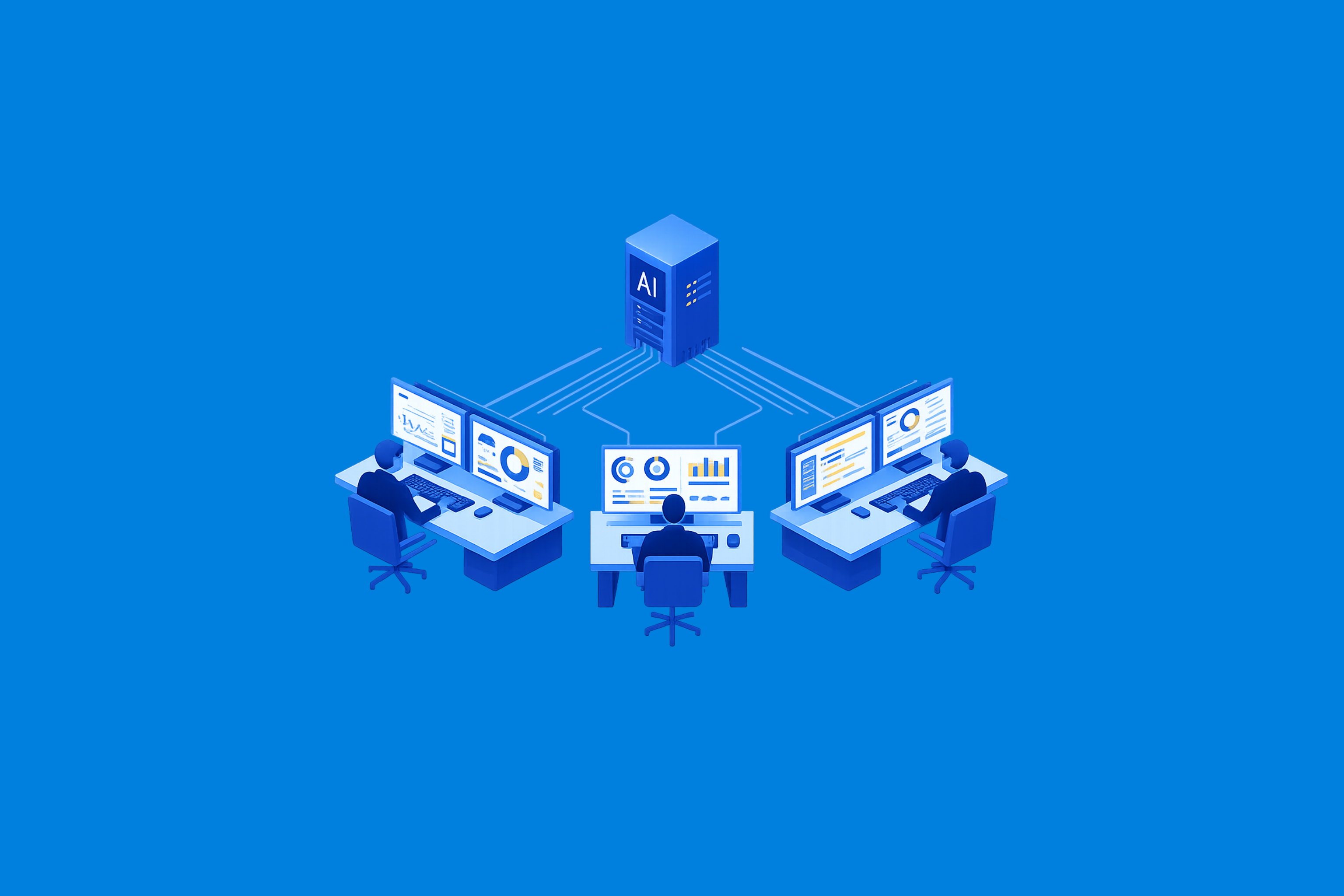
An AI-native MDR is a managed service that combines an agentic platform that executes AI SOC investigations with a SOC team that is responsible for building the infrastructure, ensuring the accuracy of the verdicts and managing response. The provider owns the investigation and response from start to finish and answers for the outcome under contract. You do not staff a 24/7 rotation to run it, because the service carries that load. Daylight is built on this model, an AI-native MDR where security experts and AI agents own the investigation through to resolution.
These are two distinct operating models, each with its own accountability. Conflating them creates procurement risk, and the "AI MDR" label on its own says little. You need to establish which operating model you are buying and who carries the outcome.
How to Choose
The right path follows from your team's scale, maturity, and appetite for operating burden. A capable in-house SOC and a lean team facing the same alert volume should reach different conclusions.
When an AI SOC Tool Is the Stronger Choice
Organizations that want to retain investigation ownership and have the expertise to operate the platform are often the best fit for an AI SOC tool. A team that already runs incident response and owns its outcomes can use a platform to extend its reach. It investigates every alert with consistent logic, clears the alert backlog, and frees senior analysts for the work that needs them, while control stays in-house. Teams in regulated or OT environments that require internal authorization for every containment action tend to prefer this arrangement too, since the response decision stays with them by design.
When a Managed Service Is the Stronger Choice
A team without the depth to staff and run a platform around the clock gets more from an AI-native MDR, where the provider carries investigation and response. The build-versus-operate tradeoff shapes everything downstream. A platform you cannot fully staff turns into shelfware, while a service absorbs the operating load a smaller team cannot carry. The managed path carries its own costs. You cede direct control of the response decision, and the provider's verdicts are only as strong as the context it builds with your team. That makes the engagement an ongoing partnership rather than a one-time handoff. Budget headroom and the seniority of available talent tend to settle the question more than alert volume does.
What to Verify Either Way
Whichever path you lean toward, a few checks separate platforms that perform from those that only demo well. Verify investigation quality on your own data by running a proof of concept against real alert volume rather than a vendor's lab benchmark. Ask what a verdict looks like and how the platform reaches it. Probe how the platform acquires and maintains the organizational and historical context specific to you. Confirm coverage depth across endpoint, cloud, identity, and SaaS, including how it handles identity attacks that produce no endpoint telemetry. Finally, make sure you can export detection logic, tuning, and investigation rules before you sign, or you have built in lock-in.
What the Ownership Question Means for Your Decision
AI SOC platforms have moved well past triage automation. The serious ones investigate, reach verdicts, and take meaningful load off a SOC, which turns the decision they force into a question of ownership. A team with the senior bench to operate a platform and a reason to keep control can use one to multiply what its analysts accomplish. A team that would rather own the result than run the operation is better served by an AI-native MDR, the model Daylight is built on, which carries investigation and response from alert through resolution. The platform or service itself is a smaller decision than the operating model you build around it.
Frequently Asked Questions About AI SOC
Do AI SOC Platforms Only Automate Triage?
No. Modern AI SOC platforms investigate alerts and reach verdicts, assembling context to establish what an alert represents and how to act on it, and many now assist threat hunting through chat-based co-pilots. Triage opens the workflow these tools handle. Evaluate a platform on the quality of its investigations and verdicts and how much operational load it removes.
Can an AI SOC Platform Replace a SOC Team?
No tool removes the need for people; it changes what they do. Running an AI SOC platform still requires experienced staff to manage it, handle escalations, and own the response, which is why operating one in-house implies around-the-clock coverage. A team that wants to remove the operating burden entirely needs a managed service that owns the outcome, rather than a tool it still has to run.
What Is the Difference Between an AI SOC Tool and an AI-Native MDR?
Ownership and operating model. An AI SOC tool is software your team runs and stays accountable for. An AI-native MDR is a managed service. The provider owns investigation and response outcomes, while also maintaining the detections, integrations, context, and coverage required to improve investigation quality over time. Both rely on AI to investigate, so the dividing line is who carries the verdict, the response, and the 24/7 burden.
What Is the Most Underestimated Risk When Deploying AI SOC?
Prompt injection. Because these platforms ingest attacker-controlled content such as phishing emails and malware artifacts, the attack surface is specific to LLM-integrated tooling and has no SOAR equivalent. The NIST AI RMF Generative AI Profile flags it, and the common mitigations, including enforced citations, approval gates, and audit logging, rarely ship as defaults, so confirm a platform has them in place.
What Integration Gaps Should I Watch For?
Coverage depth varies by domain, and most platforms see endpoints more completely than cloud or identity. Before buying, request a coverage matrix across endpoint, network, identity, cloud, and SaaS, and ask specifically how the platform detects identity-based attacks that generate no endpoint telemetry.