What Is an IOC Sweep? A Guide to IOC Hunting

.avif)
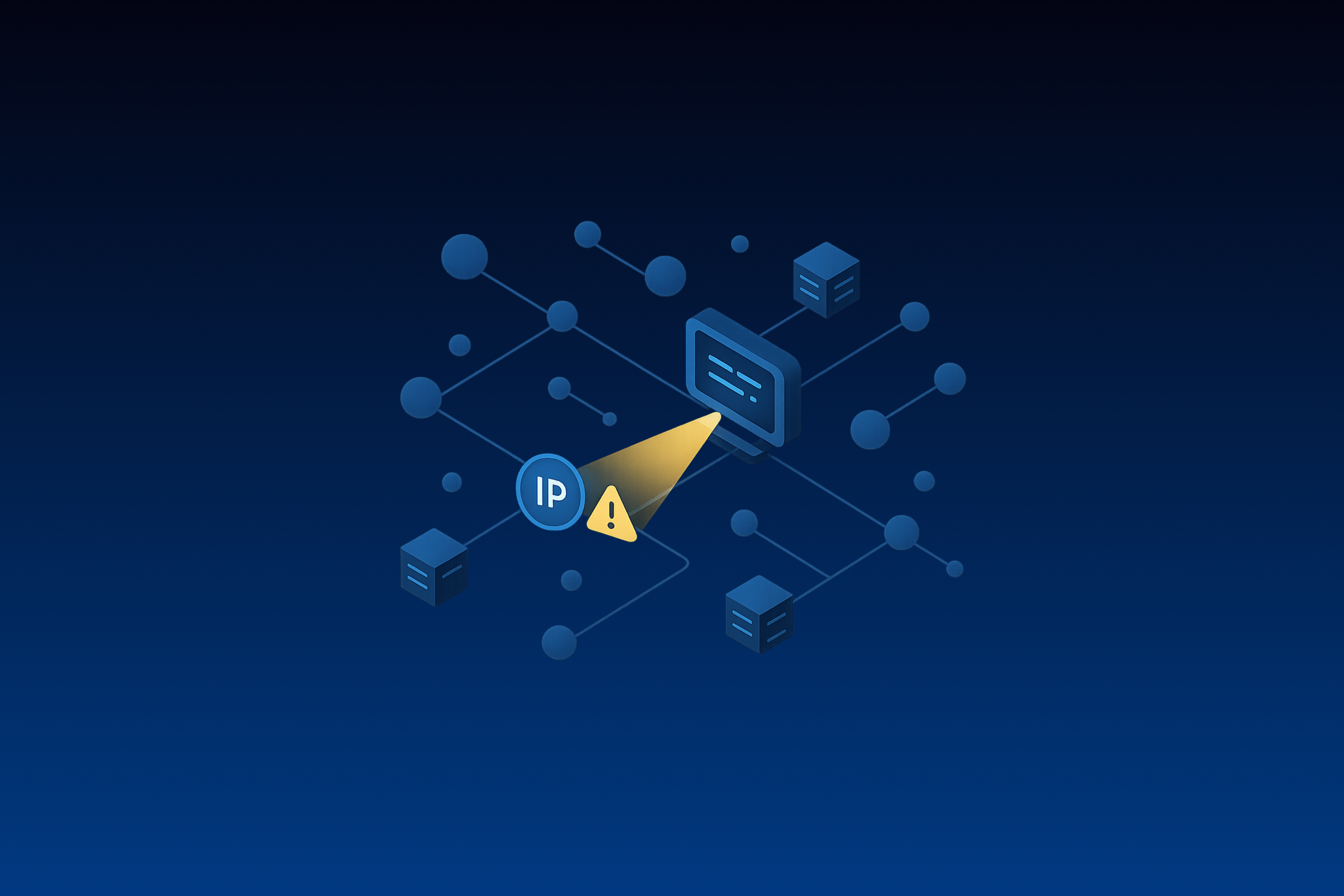
An IOC sweep is a retrospective search across your security telemetry for known malicious IPs, domains, hashes, accounts, or other indicators, run to determine whether they ever appeared in your environment and what they touched. It answers whether you've ever seen a given indicator, on any host, at any point within your retention window and, if so, what the attacker did next, not just whether your tools are blocking it today.
It's a common reactive workflow in security operations and one of the more frequently misunderstood tasks in a SOC. Teams conflate it with threat hunting, run it against stale indicators, drown in false positives on legitimate infrastructure, and mistake a completed ticket for a closed gap. Done right, a sweep converts a single alert or advisory into a map of what happened across endpoints, cloud, identity, and SaaS. Done wrong, it burns investigation time confirming that 8.8.8.8 is Google.
TL;DR:
- An IOC sweep scopes known indicators across retained telemetry. You take known indicators and search them against your telemetry, including archived data, to find matches and map the blast radius of a compromise. It turns a published indicator into a direct search of your own environment.
- IOCs sit at the bottom of the Pyramid of Pain and decay fast. Lower-layer indicators such as hashes, IP addresses, and domains are fragile because adversaries can change them cheaply. Sweep on stale indicators and you generate noise.
- Every validated hit should become codified detection. IOCs discovered manually and never operationalized are technical debt.
- Control planes outside EDR often expose the real coverage gaps, especially across cloud and SaaS environments where identity activity is involved. EDR tools-centric sweep playbooks do not translate cleanly to control planes where OAuth activity and ephemeral resources require deliberate architecture decisions. Sweep tooling often becomes less mature when teams apply endpoint-centric playbooks to cloud and SaaS control planes.
What an IOC Sweep Actually Is
An IOC sweep takes known indicators of compromise and searches them against your environment's telemetry, including historical and archived data, to identify matches and map the scope of compromise. A sweep is retrospective. Continuous monitoring matches indicators against events as they stream in. A sweep goes backward, searching stored telemetry for artifacts that may have arrived weeks before anyone knew to look for them.
The workflow starts with a known IOC, then kicks off a retroactive search across stored telemetry to see whether any environment has seen it. That retroactive analysis separates a sweep from ordinary real-time matching. It is fast validation: scoping known IOCs across the environment before a full behavioral hunt or incident response workstream takes over.
Responders use that validation to scope compromise. Once responders confirm one indicator on one host, they sweep the environment for it everywhere. A single alert becomes a picture of affected systems. The sweep measures intrusion scope.
Sweep, Monitoring, and Hunting Are Three Different Things
The three modalities get conflated constantly, and the conflation distorts program maturity assessments. They differ in why they start and how deeply they investigate.
Operationally, if an indicator is already known and stable, it belongs in your detection rules instead of a recurring manual sweep. The sweep is for the window between disclosure and codification, and for scoping an active incident. Threat hunting has a different scope from compromise assessment and continuous security monitoring.
MITRE's TTP-based hunting paper describes the shift: "Prior to 2016, threat hunting processes appear to have been primarily organized around searching for IOCs." The same paper describes the ceiling bluntly. IOC and signature-based detection "provides some value, but is ineffective against adaptable threats." Sweeps are necessary and useful, and they are also the shallowest layer of the stack.
What You Sweep for, and Why It Decays
The CISA incident response playbooks group IOCs into three types: atomic, computed, and behavioral. Atomic indicators, such as IP addresses, domains, URLs, registry keys, process names, and mutex values, show up directly in telemetry and cannot be broken into smaller parts. Computed indicators, like file hashes and Yara or regex signatures, come from running a calculation on the underlying data rather than appearing in it directly. Behavioral indicators describe patterns that deviate from a baseline, like multiple failed logins across accounts in a short window, and require an established baseline to mean anything.
Adversaries can change the indicators that are easiest to sweep for most cheaply. This is the entire argument of the Pyramid of Pain, formally documented by the IETF in RFC 9424.
RFC 9424 explains the decay mechanism directly. Those hashes "are fragile and can (and often will) be changed between campaigns. Malicious IP addresses and domain names can also be changed between campaigns, but this may happen less frequently due to the greater pain of managing infrastructure." Nearly all low-level IOCs are transitory. Attacker behavior persists longer.
A sweep against a stale feed can be worse than no sweep. It manufactures noise and desensitizes the people reading it, which is why RFC 9424 says IOCs should be removed at end-of-life and why the CISA operational value paper warns that indicators published after threats are mitigated can offer little value for security teams. For every paragraph of threat intel, ask what you can use to detect the adversary and where it falls on the pyramid.
How Mature Teams Execute a Sweep
Real scoping depends on validated indicators, known coverage limits, historical telemetry, business-context triage, and detection handoff.
1. Source and Validate the Indicators
Pull IOCs from CISA advisories, ISACs, trusted threat reports, and open repositories. CISA advisories routinely publish IOCs and direct organizations to review them for indications of current or historical activity.
Before running anything, validate. Not all IOCs are actionable. Check false positive likelihood, domain age, IP reputation, associated behaviors, and whether the indicator is still active. CISA itself flags this. In one CISA GeoServer advisory, the agency noted that observed IPs "may be associated with legitimate activity" and encouraged investigation "prior to taking action, such as blocking." A CISA advisory on Iranian brute-force activity went further, stating that the authoring agencies do not recommend blocking listed IP addresses based solely on their inclusion in the advisory, and instead pointing defenders toward using them to search for prior activity in their own logs.
2. Know Your Data Sources and Their Limits
The sweep surface can span endpoint, cloud control planes, IAM, ephemeral resources, and SaaS logs such as ConnectedAppUsage and API login history, and session logs for non-whitelisted IPs. EDR is usually the most mature surface, but the rest of the environment needs deliberate architecture decisions. Plan around hard limits or you get partial coverage that reports as complete: indicator limits, API behavior, historical job windows, default investigation windows, retention limits, and indexability all bound what a sweep can see.
3. Execute Across Historical Telemetry
Search tooling compares stored events against threat indicators over a defined lookback window. Network-session sweeps typically compare destination IPs, domains, URLs, and file hashes against threat indicator lists. Indicator matching continuously compares event fields against threat indicator fields, while the retrospective sweep searches the telemetry you already retained.
Retrospective hunts require high-fidelity logs and storage you can search later. Retention policy therefore becomes a hard constraint on what a sweep can even see.
4. Triage Hits Against Business Context
Treat a match as a lead to validate. Validate hits against legitimate business activity and known-good indicators before escalating. Common false positive traps are consistent: public infrastructure flagged because a threat report mentioned attackers using it, and github.com flagged because it appeared in a TTP description.
An IOC has little meaning as a standalone artifact. Meaningful hunting requires pivoting off indicators to add context and telemetry specific to the impacted organization. Context is what lets you tell cryptomining from a legitimate load spike, or account discovery from a benign admin query.
5. Operationalize Every Validated Hit
Every validated hit should become a detection rule. Analysts need to validate each IOC, enrich it with contextual metadata, rotate it out when stale, and codify it into an automated detection once it produces reliable signal. Skip that last step and the sweep repeats itself: the same indicators get re-validated each time instead of becoming standing coverage, which is where the operational debt accumulates.
If a detection generates high-value signal but too many false positives to alert on reliably, run it as a hunting query rather than an alert rule, and document the known limitations in the rule itself. Treat the sweep, the detection, and the tuning as one continuous lifecycle.
Where IOC Sweeps Sit in a Hunting Program
A mature threat hunting program uses IOC sweeps as one component, not the whole discipline. MITRE's TTP-based hunting paper frames IOC-centered hunting as the historical baseline that mature programs have largely moved past, in favor of tracking adversary TTPs directly.
In practice, mature hunt packages combine IOC sweeps from threat intelligence reports with baseline analysis and ATT&CK-aligned hypotheses during TTP review. They also split intel-based hunting, which uses IOCs and IOAs as triggers, from hypothesis-driven hunting aligned to MITRE ATT&CK. The sweep is one line in a longer hunt package.
TTPs are the most valuable indicators because attacker behavior takes significant time and money to modify, even though behavior is harder to model and detect with traditional tools. IOC-only programs can feel productive because concrete artifacts are easy to count, but that can collapse into vanity metrics with little lasting impact on security posture. IOC sweeps should feed hypothesis-based and behavior-based threat hunting.
The Two Constraints Nobody Solves With Better Queries
Two structural problems limit every sweep methodology, and better KQL doesn't fix either one.
Long dwell time can exceed log retention. Long-duration APT reporting from CISA has warned that several observed IP addresses were first seen years before publication and may no longer be in use by the actors. If an APT sat in your environment longer than your telemetry reaches back, a retrospective sweep structurally cannot see the initial compromise. Long-term retention architecture sets that limit.
Exploitation after disclosure moves fast. When a CVE is disclosed as exploited, the race between attack and patch plays out in hours or days. The GeoServer case (CVE-2024-36401) is the cautionary tale: published June 30, first exploited July 11, and not detected in one victim environment until July 31, three weeks of undetected dwell time. Manual, human-paced sweeps against a full environment do not close that gap alone.
Where Scaled, Context-Aware Execution Improves Sweep Coverage
Human hunters should define the hunt, and automation should execute the search across the full environment at machine speed. A human decides which advisory matters and which indicators are worth chasing, then ranks them against the pyramid. The execution across EDR, SIEM, cloud logs, and identity systems runs in parallel rather than tool by tool.
This split matters most on the two constraints above. Parallel execution compresses the time between disclosure and full scoping. Context is what turns triage into a verdict instead of a guess. An IP's reputation can flip from malicious to legitimate within months, and only an investigation that checks the user, the asset's role, and the activity baseline for that environment can tell the difference. That's the context problem that shrinks false positives, not a bigger indicator list.
Scaled threat hunting programs apply this model to IOC-based sweeps and hypothesis-based hunts across endpoint, identity, cloud and SaaS telemetry, without treating manual search as the whole program.
Daylight Runs IOC Sweeps as One Half of Threat Hunting
An IOC sweep validates exposure to a threat someone already reported. It can't surface the behavior nobody has written an advisory about yet, which is the gap this article has been describing throughout. Daylight's Threat Hunting service is built around that gap: it treats the IOC sweep as one of two complementary hunt types, not the whole job. IOC-based hunts follow a defined playbook and execute a deterministic search across endpoint, identity, cloud, and SaaS logs, typically against up to 90 days of retained telemetry, returning a binary result: the indicator was found, or it wasn't. Hypothesis-based hunts run alongside them: a security expert defines a thesis about adversary behavior specific to the customer's environment, then investigates it iteratively until the evidence confirms or disproves it.
Most MDR providers can run an IOC sweep when a known threat is active. Fewer treat hypothesis-based hunting as a standing capability rather than an occasional add-on. Worth asking any provider: which of the two do you actually run, and where do findings from either one end up once the hunt is over?
Frequently Asked Questions About an IOC Sweep
How Far Back Should a Retrospective Sweep Look, and What Determines the Ceiling?
Your log retention window sets the ceiling. If your telemetry only reaches back weeks or months, your sweep cannot recover evidence that aged out before the indicator was published. Tool-specific defaults and subscription tiers vary, but the architecture principle remains: if your threat model includes long-dwell APTs, retention architecture is a prerequisite. Extending retention after disclosure does not recover data you already aged out.
When Should an Indicator Move out of the Sweep Workflow and Into a Standing Detection Rule?
As soon as it is stable and validated. Teams should bake known IOCs into the SOC workflow as part of automated detection and response, instead of sweeping for them manually on a recurring basis. The sweep is for the window between disclosure and codification, and for incident scoping. If you are running the same IOC sweep quarterly, that indicator should have become a detection after the first run. The exception is high-noise indicators, which teams should run as hunting queries rather than alert rules to avoid alert fatigue.
Why Do IOC Sweeps Generate So Many False Positives on Legitimate Infrastructure?
Because format matching without context treats any string that looks like an IOC as an IOC. Sweep tools can misclassify benign entities like msn.com, 1.1.1.1, and github.com when they appear in threat reports describing attacker behavior. Enrich and pivot before escalation: validate against known-good infrastructure, cross-reference multiple independent sources, and check indicator currency. Use context and confidence as the validation framework, with currency checked before any hit gets escalated.
Do MDR Providers Include IOC Sweeps, and How Does That Differ From a Dedicated Threat Hunting Engagement?
Continuous IOC matching against incoming telemetry is a standard monitoring function in many MDR engagements. Retrospective IOC sweeps and dedicated threat hunting are separate workflows. A retrospective sweep asks whether known indicators appeared anywhere in retained telemetry over a defined lookback window. Dedicated threat hunting has an explicit hypothesis, scope, completion criteria, and detection-engineering handoff. Daylight is a MASS company, meaning it offers managed agentic security services for Security Operations. AI-native MDR handles investigation and response to agreed-upon alerts, while threat hunting is a separate service. In MDR engagements, daily monitoring stays separate from targeted hunting for major known attacks or confirmed incidents.
How Much of an IOC Sweep Can Be Automated Without Introducing New Failure Modes?
Execution and enrichment automate well. Human analysts should own hypothesis generation and high-impact response. Thresholds at ingestion filter unverified indicators, and parallel execution across systems compresses scoping time. Ungrounded AI outputs can fabricate IOCs or misattribute sources. The resulting false positives waste analyst time and desensitize teams to genuine warnings. Auto-isolating a production server on a misclassified hit can cause more damage than the threat, which is why high-impact actions belong behind human approval gates. Production AI SOCs should reserve full automation for low-risk actions like auto-closing known false positives.