Cloud Detection and Response: The MDR Investigation Gap

.avif)
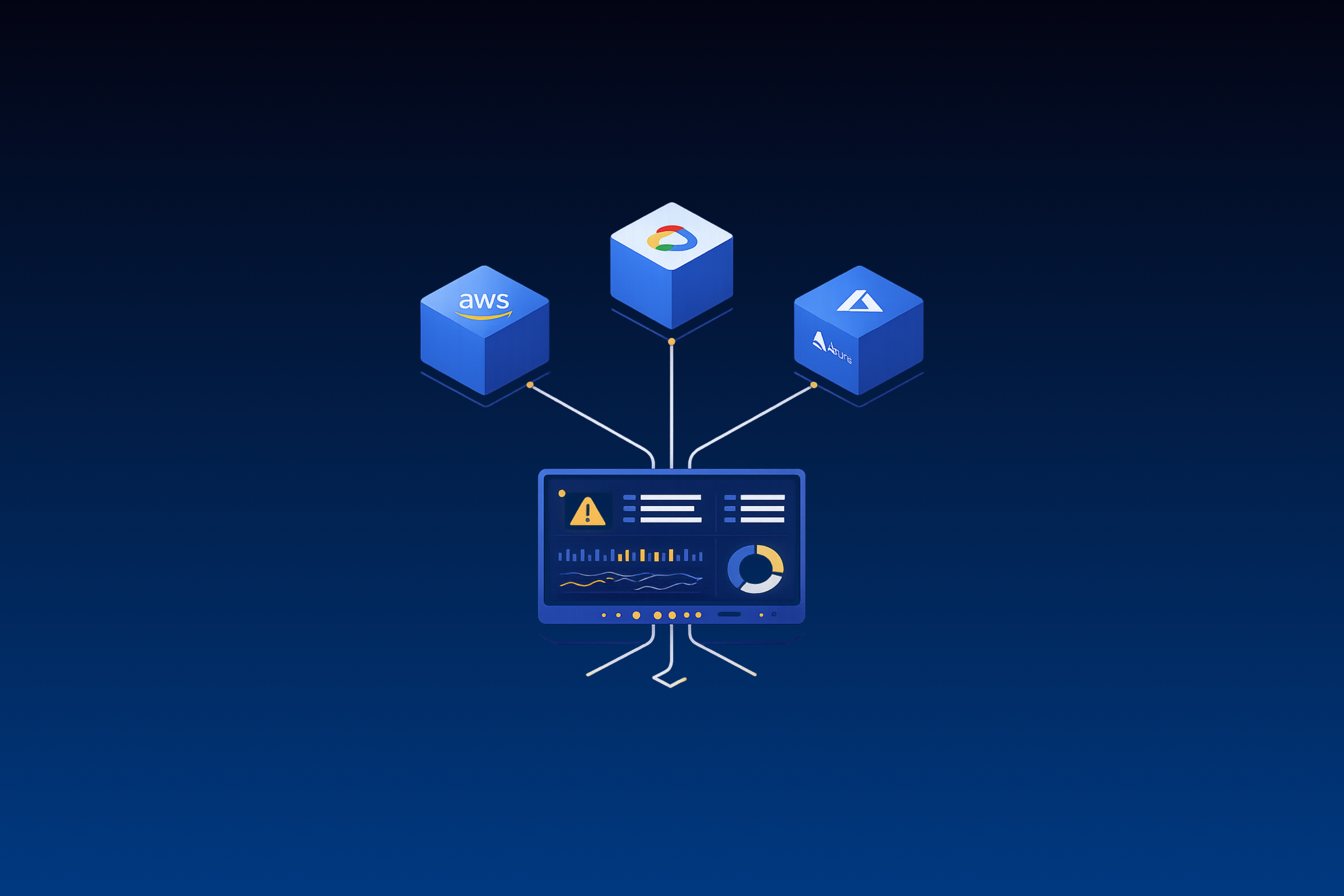
The team deploys Wiz Defend, or Upwind CDR, or Orca CDR, and starts seeing the cloud attack paths that no single layer of their existing stack was catching. The visibility is valuable, but it comes with a new reality: CDR tools generate a high volume of alerts, and many of those alerts require investigations that span cloud infrastructure, identity systems, SaaS applications, and business context.
Cloud detection capability has advanced sharply in the last eighteen months. CDR as a tool category was barely a line item in 2022. By 2026, it is a sizable budget item at a growing number of cloud-mature organizations. For teams handling investigations internally, that often means additional headcount and specialized expertise. For teams using an MDR, a different question emerges: can the provider actually investigate these cloud-native alerts to a verdict, or does the work ultimately get handed back to the customer team?
TL;DR:
- CDR is a tool category. Wiz Defend, Upwind CDR, Orca CDR, and similar products are the detection layer for cloud environments. What they surface still has to be investigated, and that is where the operating model above them gets tested.
- Cloud detection improved sharply in the last eighteen months. MDR operating models built for endpoint signal mix did not adapt at the same pace. The pain customers report sits in that gap.
- When a runtime cloud alert lands at a traditional MDR, the investigation playbook trained on endpoint forensics does not transfer. The analyst has no process tree to walk, no host to isolate, no parent process to inspect. Escalation becomes the rational choice, then the default.
- The fix is architectural, not operational. You cannot staff your way past the gap. The cleanest diagnostic for whether an MDR has built the right architecture is the depth of alert coverage on a CDR tool like Wiz Defend.
What CDR Is and Why the Category Exists Now
CDR tools detect threats across the cloud attack surface: cloud control planes (AWS, Azure, GCP), identity systems, runtime workloads, and the SaaS audit events that fan out from a compromised account. The vendor list includes Wiz Defend, Upwind, Orca, Sweet Security, and others. The category is moving fast, with established cloud security companies adding runtime detection and newer entrants building from a runtime-first foundation.
The reason the category exists now is that cloud security spent the last decade dominated by posture. CSPM told you what was misconfigured. CWPP told you what a container was doing. Neither category was designed to surface the multi-step attack patterns that span cloud control plane, identity, and SaaS.
CDR is the runtime detection layer that sits across those systems and catches the patterns no single tool would catch on its own: an unusual IAM role created off-hours, a privilege escalation in a connected SaaS, a data exfiltration event spanning cloud storage and an external endpoint.
The output is high-volume cloud-native alerts, often surfacing real attack patterns that would have been invisible two years ago. The detection works. The downstream question is who investigates it.
What Happens When a CDR Alert Lands at a Traditional MDR
The alert arrives in the MDR's queue with a payload describing the cloud event: an IAM role creation in AWS, with metadata about the principal, the timestamp, and the source IP. The MDR analyst opens the case and starts investigating.
The questions an experienced investigator wants to answer are familiar, and each one lives in a different system the analyst may not have direct, deep access to:
- Who is this principal, and what does their normal pattern look like? Identity provider data (Okta or Entra ID), with sign-in logs the MDR may or may not have ingested.
- What did they do before and after this event? CloudTrail history, integrated to the MDR at varying depth.
- What does this role actually grant access to? Asset inventory, which is probably not in the MDR at all.
- Has anything anomalous happened in connected SaaS apps in the same window? SaaS audit logs, in another tool entirely.
The challenge is not analyst expertise alone. Cloud investigations require context across cloud, identity, SaaS, and business systems, and many MDR operating models were not built to assemble that context efficiently. There is no process tree to walk, no host to isolate, no parent process to inspect. The unit of investigation is an IAM principal and a chain of API actions across services, and the analyst's intuition for "what normal looks like" in those systems is thin. The cloud attack pattern that spans systems gets investigated as a series of disconnected single-system observations, none of which reach a verdict.
After ten or fifteen minutes of trying to pull context from systems the MDR's integration depth does not fully reach, the analyst makes a rational decision. They write up what they have. They mark the case as suspicious-but-unresolved. They escalate.
That decision is correct at the individual case level. Multiplied across the alert volume a working CDR tool produces, it becomes the operating model's default. The customer's team is now investigating cloud cases, on top of everything else they own.
Why MDR Cloud Investigation Is an Architecture Problem
The traditional response is to add more analyst capacity or specialized expertise. That response treats a structural problem as a staffing one. Analyst-centric investigation models scale through headcount, while cloud signal volume scales with the environment, and those two curves do not meet.
Cloud signal volume grows with cloud activity, which is structurally larger and accelerating faster than any team's ability to add headcount. Closing the gap by hiring means losing ground a little more slowly.
The architectural answer is different. The operating model needs cross-system investigation built into the substrate, so the IAM event automatically pulls CloudTrail history, identity sign-ins, SaaS audit context, and asset criticality before any human sees the case. It needs a cloud-context library that survives the analyst leaving, so the next investigation does not start from zero. It needs an investigation throughput that is not gated by analyst capacity, so signal volume does not back up into a customer queue.
These are architectural commitments. They show up in how the platform was built, what data it was designed to ingest natively, what the investigation primitives are. They do not show up in a hiring plan, and they are difficult to retrofit onto an analyst-driven service that has been running the same way for a decade.
Customers who push their existing MDR on "can you get better at cloud investigation" usually find the answer is no. The limit is rarely willingness. The substrate was never built for this signal mix, which makes it a plumbing problem rather than a training one.
How to Evaluate an MDR's Cloud Integration Depth
Most MDR providers list Wiz Defend, Upwind, or Orca on their integrations page. Sales calls reference the integration. Marketing materials show the logos. Almost none of those providers can answer a specific follow-up question: of the 60-plus alert types Wiz Defend generates, how many does the MDR actively investigate?
The answer is the cleanest diagnostic available for whether an MDR has built operational depth on a CDR source or simply added a logo. A provider investigating two or three alert types is integrating to ingest. A provider investigating most of the alert types has built the cross-system investigation substrate the alert mix requires. The difference between those two postures is the architectural gap this article describes.
Daylight is a Managed Agentic Security Services (MASS) company. Its AI MDR service was built on this architectural commitment from the start, which is why Daylight provides the best coverage for Wiz Defend. It is able to investigate all Wiz Defend alerts fully.
Investigations are executed by an agentic investigation engine that pulls relevant telemetry, organizational, and historical context from across cloud, identity, and SaaS systems, allowing signals to be correlated and investigated across environments.
The integration-depth question is worth asking any MDR being evaluated on cloud. Anything below substantial alert-type coverage on a major CDR vendor signals an integration that exists on paper without the investigation substrate behind it.
Frequently Asked Questions About CDR
Should We Deploy a CDR Tool Before or After Engaging an MDR?
Most cloud-mature teams deploy CDR first because the visibility gap they had was specifically in cloud detection. The MDR question follows. Buying the MDR first and adding CDR later usually exposes the gap this article describes, because the MDR's substrate is already in place before the cloud signal mix arrives.
Beyond Wiz Coverage, What Else Should We Ask an MDR About Cloud Signals?
Ask three things. First, what cross-system correlation actually looks like when an IAM event in AWS triggers an identity check in Okta and an audit-log query in Salesforce, and ask to see a real investigation rather than a description. Second, what share of cloud alerts the MDR resolves to a verdict without escalating back to you. Third, what cloud context the provider maintains for your environment, such as asset criticality, role sensitivity, and OAuth grant status, and who is accountable for keeping it accurate.
What if Our Current MDR Is Escalating Cloud Alerts Back to Us?
That is the diagnostic. Push the MDR on the architecture. Ask whether the gap is staffing or substrate. The honest answers vary, but if the architecture was not built for cloud signal mix, no amount of additional hiring or cross-training closes the gap. Contract timing and switching cost determine whether the answer is to push for incremental improvement or to evaluate alternatives.
Is CDR the Same as CWPP or CNAPP?
No. CWPP addresses workload-level security (process behavior, runtime activity, container security). CSPM addresses cloud configuration posture. CNAPP bundles those plus other cloud security capabilities. CDR sits across cloud control plane, identity, and SaaS detection and is the runtime detection layer for cloud environments specifically. The categories overlap in marketing copy more than they do in practice.